




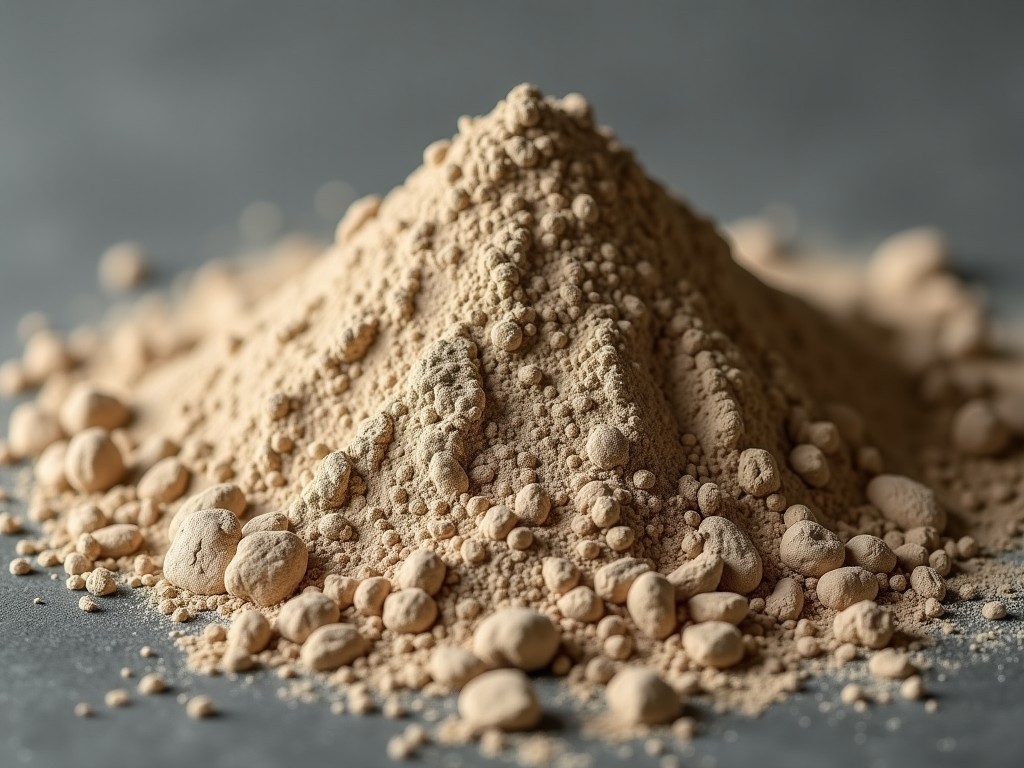
B2B Bentonite Clay Powder Uses And Benefits
Bentonite Clay Powder for B2B Industrial Applications
Bentonite is a naturally occurring smectite clay primarily composed of montmorillonite. Its layered structure enables water uptake and cation exchange, which drive its functional performance across sectors.
Composition and Key Characteristics
Typical grades contain 60‑80% montmorillonite, with quartz, feldspar, and minor accessories making up the balance. Milling controls the d50 particle size, generally falling between 2 µm and 10 µm for standard powders.
Specific surface area measured by BET ranges from 50 m²/g to 200 m²/g, affecting adsorption capacity. Cation exchange capacity (CEC) for sodium‑bentonite usually lies between 80 meq/100 g and 120 meq/100 g.
Typical Technical Properties
| Property | Typical Range | Test Method |
|---|---|---|
| Moisture Content (as‑received) | 8 % – 12 % | ASTM D2216 |
| pH (10 % slurry) | 8.5 – 9.5 | ASTM D4972 |
| Swelling Index (mL/2 g) | 15 – 30 | ASTM D5890 |
| Loss on Ignition (LOI) | 8 % – 14 % | ASTM D1203 |
Primary Industrial Applications
- Foundry molding uses bentonite as a binder that imparts green strength and thermal stability to sand molds, reducing casting defects.
- Drilling fluids rely on its thixotropic viscosity and filtration control to maintain borehole stability and transport cuttings.
- Civil engineering seals employ hydrated bentonite to create low‑permeability barriers for landfill liners and pond liners.
- Iron ore pelletizing benefits from its bonding strength, improving green pellet handling and lowering dust generation.
- Animal feed incorporates bentonite as a toxin‑binding agent that adsorbs mycotoxins and enhances feed safety.
Process‑Specific Benefits
In foundry binders, controlled swelling pressure reduces mold cracking, leading to lower scrap rates and better dimensional accuracy of castings.
Drilling muds gain yield point and gel strength from bentonite, which prevents fluid sag and minimizes stuck‑pipe incidents.
For sealing applications, a fully hydrated bentonite layer can achieve hydraulic conductivity below 1×10⁻⁹ m/s, meeting stringent environmental containment standards.
Quality Control and Testing
Each batch undergoes laser diffraction particle size analysis to confirm the d50 falls within the agreed range. Moisture content is verified by thermogravimetric loss on drying at 105 °C.
CEC is determined via ammonium acetate exchange, and swelling index is measured under standardized conditions to ensure lot‑to‑lot consistency.
Test results are documented and supplied to customers upon request, supporting traceability and compliance with industry specifications.
Customization Options
- Adjust sodium or calcium ion exchange to tailor swelling behavior and pH for specific processes.
- Mill to achieve targeted particle size distributions for fine‑coating or rapid‑hydration requirements.
- Blend with polymers or loss‑circulation materials to enhance drilling fluid performance.
- Apply surface modifiers to increase hydrocarbon adsorption in spill‑control products.
Frequently Asked Questions
Can the particle size be customized for our process?
Yes, milling parameters are adjusted to achieve target d50 values ranging from 2 µm to 15 µm, depending on application requirements.
What information is needed to receive a quotation?
Please provide the intended use, required quantity, desired moisture content, and any specific property specifications such as CEC or swelling index.
How is product quality verified before shipment?
Each lot is sampled and tested for moisture, pH, swelling index, and particle size; a certificate of analysis accompanies the shipment.
Next Steps
To discuss how bentonite clay powder can be integrated into your production line, please contact our technical team.
Request Technical Consultation