




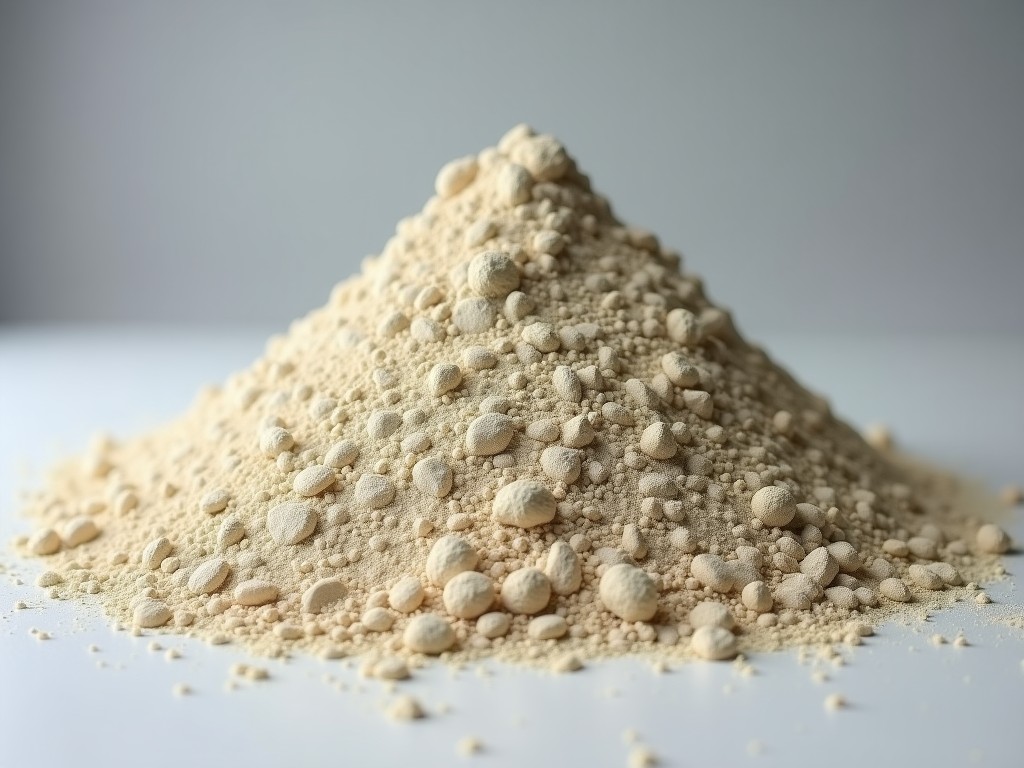
Calcium Bentonite Clay Suppliers
Calcium Bentonite Clay – Industrial Grade Supplier Information
Calcium bentonite clay is a naturally occurring smectite mineral formed from the alteration of volcanic ash in calcium-rich environments. Its dominant exchangeable cation is calcium, which influences its swelling behavior, cation exchange capacity, and compatibility with various industrial processes. Unlike sodium bentonite, calcium bentonite exhibits lower swell but higher stability in saline or high‑pH conditions, making it suitable for applications where controlled hydration is required.
Key Technical Properties
Industrial buyers evaluate calcium bentonite based on measurable characteristics that affect performance in drilling, foundry, pelletizing, and environmental applications. The following table lists typical ranges for commercially available grades; actual values can vary with deposit source and processing.
| Property | Typical Range | Test Method (Reference) |
|---|---|---|
| Particle Size (D50) | 2 – 15 µm | Laser diffraction |
| Swelling Index (in water, 24 h) | 8 – 18 mL/2 g | ASTM D5890 |
| Cation Exchange Capacity (CEC) | 60 – 90 meq/100 g | Ammonium acetate method |
| pH (10 % slurry) | 8.0 – 9.5 | Electrometric |
| Moisture Content (as‑received) | 8 – 12 % | Thermogravimetric |
| Loss on Ignition (LOI, 1000 °C) | 10 – 14 % | Thermal analysis |
| Specific Gravity | 2.3 – 2.6 | Pycnometry |
Typical Industrial Applications
Calcium bentonite’s moderate swelling, good suspension ability, and calcium‑rich surface chemistry make it valuable in processes that require controlled viscosity, binding, or ion exchange. Its performance is linked to the balance between plasticity and stability in aqueous systems.
- Drilling fluids – provides viscosity control and cuttings transport while minimizing formation damage in calcium‑rich reservoirs.
- Foundry binders – acts as a green strength enhancer for molds where lower water demand reduces defects.
- Iron ore pelletizing – serves as a binder that improves pellet integrity without excessive swelling during induration.
- Environmental remediation – used in liners and caps for its low permeability and capacity to adsorb heavy metals via cation exchange.
- Animal feed & agriculture – functions as an anti‑caking agent and toxin binder due to its adsorptive surface.
Selection Considerations for Buyers
Choosing the appropriate grade involves matching the clay’s intrinsic properties to the process conditions. Buyers should request data sheets that detail the parameters most relevant to their application, and consider how variations in mineralogy or processing affect end‑use performance.
- Particle size distribution – finer grades increase surface area and viscosity; coarser grades improve flowability in dry mixing.
- Swelling capacity – higher swell is beneficial for sealing applications, while lower swell is preferred where dimensional stability is critical.
- Calcium content – influences pH stability and compatibility with acidic or alkaline formulations.
- Purity levels – low levels of quartz, feldspar, or organic matter reduce abrasiveness and improve consistency.
- Moisture content – affects dosing accuracy and energy consumption in drying steps.
Quality Control and Testing
Suppliers typically implement a combination of mineralogical, physical, and chemical tests to ensure lot‑to‑lot consistency. Understanding the inspection points helps buyers assess risk and verify that the material meets specification before integration into production lines.
- X‑ray diffraction (XRD) – confirms montmorillonite presence and detects impurity phases.
- Laser particle size analysis – monitors D10, D50, D90 for process compatibility.
- Swelling index test – measures hydration behavior under standardized conditions.
- CEC determination – quantifies exchange capacity via ammonium acetate saturation.
- Loss on ignition – evaluates organic and volatile content.
- pH measurement – ensures slurry acidity/alkalinity aligns with process windows.
Packaging and Logistics
Calcium bentonite is shipped in bulk or bagged forms depending on customer handling equipment and storage facilities. Proper packaging protects the material from moisture uptake and contamination during transit.
- Multi‑wall paper bags with polyethylene liner – 25 kg or 50 kg net weight, suitable for palletized storage.
- Flexible intermediate bulk containers (FIBCs) – 500 kg to 1500 kg capacity, with top spout and bottom discharge.
- Bulk pneumatic tankers – for direct silo feeding, equipped with moisture‑proof liners.
- Custom packaging – available upon request for specific handling requirements (e.g., anti‑static liners, UV‑protected films).
Frequently Asked Questions
Can the particle size be customized for specific processes?
Yes, milling and classification steps can be adjusted to target D50 ranges from 2 µm to 20 µm. Buyers should provide the desired size distribution and any constraints on fines content when requesting a quotation.
What information is needed to obtain a price quote?
Typical requirements include: estimated annual volume, preferred packaging type, target particle size or swelling index, delivery destination, and any required certifications (e.g., ISO 9001, REACH compliance). Providing this data enables the supplier to calculate accurate freight and handling costs.
How is product consistency verified between batches?
Suppliers retain representative samples from each lot and perform a full suite of tests (XRD, particle size, swelling, CEC, LOI, pH). Results are compared against internal control charts; any deviation beyond set tolerances triggers investigation before release.
Contact our technical team to discuss your specific calcium bentonite clay requirements and receive a tailored quotation.