




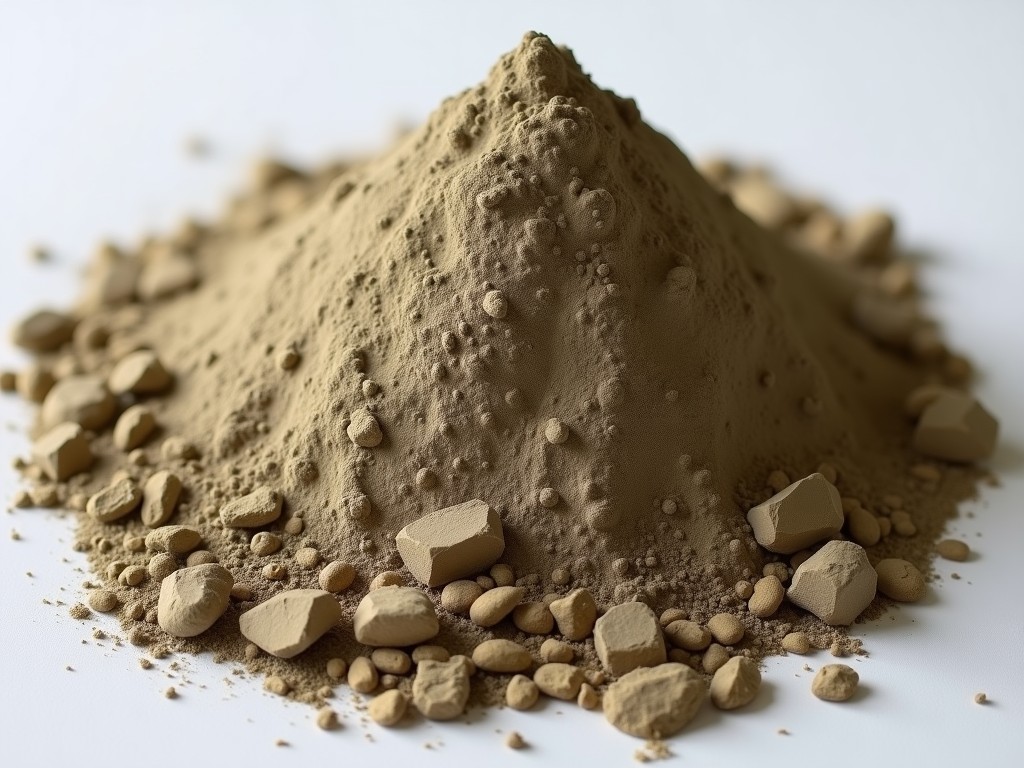
China Raw Bentonite Clay Powder
China Raw Bentonite Clay Powder
Raw bentonite clay is a naturally occurring aluminosilicate mineral primarily composed of montmorillonite. Its layered structure allows water intercalation, resulting in swelling and thixotropic behavior that are critical for many industrial processes.
The chemical composition influences performance in applications such as drilling fluids, foundry sands, and pelletizing. Key constituents include silica (SiO₂), alumina (Al₂O₃), iron oxide (Fe₂O₃), and trace amounts of magnesium, calcium, and sodium.
Typical Physical Properties
Below are representative values for raw bentonite clay powder sourced from China. Actual figures vary with deposit location and processing conditions; values are provided as ranges to assist in preliminary material selection.
| Property | Typical Value | Unit | Test Method |
|---|---|---|---|
| Montmorillonite Content | 70 – 90 | % | XRD / Thermogravimetric |
| Swelling Index (2 g in 100 mL water) | 15 – 30 | mL/2 g | ASTM D5890 |
| pH (10 % slurry) | 8.5 – 9.5 | – | ASTM D1293 |
| Loss on Ignition (LOI) | 8 – 12 | % | ASTM D2216 |
| D₅₀ Particle Size | 5 – 15 | µm | Laser Diffraction |
| Specific Surface Area (BET) | 40 – 80 | m²/g | ASTM D3663 |
| Cation Exchange Capacity (CEC) | 70 – 100 | meq/100 g | AMMONIUM ACETATE |
Typical Industrial Applications
The swelling and rheological properties of bentonite make it suitable as a viscosifier and filtration reducer in water‑based drilling fluids. Its ability to form a low‑permeability filter cake reduces fluid loss into the formation.
In foundry operations, bentonite acts as a binder for green sand molds. The clay’s plasticity provides sufficient green strength while allowing adequate permeability for gas escape during metal pouring.
For iron ore pelletizing, bentonite serves as a binder that improves pellet compressive strength and reduces dust generation during handling. The dosage is typically calibrated based on the desired drop number and abrasion index.
- Drilling mud formulations – viscosity control, hole stabilization
- Foundry sand bonding – green strength, collapsibility
- Pelletizing of iron ore – binder efficiency, dust suppression
- Civil engineering – sealing membranes, slurry walls
- Animal feed – toxin adsorption, pellet binder
Quality Assurance and Testing
Raw material verification begins with mineralogical analysis using X‑ray diffraction to confirm montmorillonite predominance. Chemical composition is assessed via X‑ray fluorescence (XRF) for major oxides.
Physical testing includes swelling index measurement, pH determination of a 10 % slurry, and particle size distribution by laser diffraction. Each batch is accompanied by a certificate of analysis reporting the values shown in the table above.
Process controls monitor moisture content and loss on ignition to ensure consistent performance across shipments. Non‑conforming material is segregated and re‑processed or diverted to lower‑specification applications.
Packaging Options
Bentonite powder is packaged to prevent moisture uptake and contamination during transit. Common configurations include multi‑wall paper bags with an inner polyethylene liner, suitable for 25 kg net weight.
For bulk handling, the product can be loaded into flexible intermediate bulk containers (FIBCs) with a capacity of 1 tonne, equipped with a spout for controlled discharge. All packaging units are sealed and labeled with batch identification and safety information.
Custom packaging specifications, such as valve bags or moisture‑barrier liners, are available upon request to meet specific storage or automated feeding requirements.
Inquiry
To obtain a formal quotation, please provide the required quantity, preferred packaging, and destination port. Additional details such as target montmorillonite content, swelling index, or any special testing needs will enable us to tailor the offer to your project.