




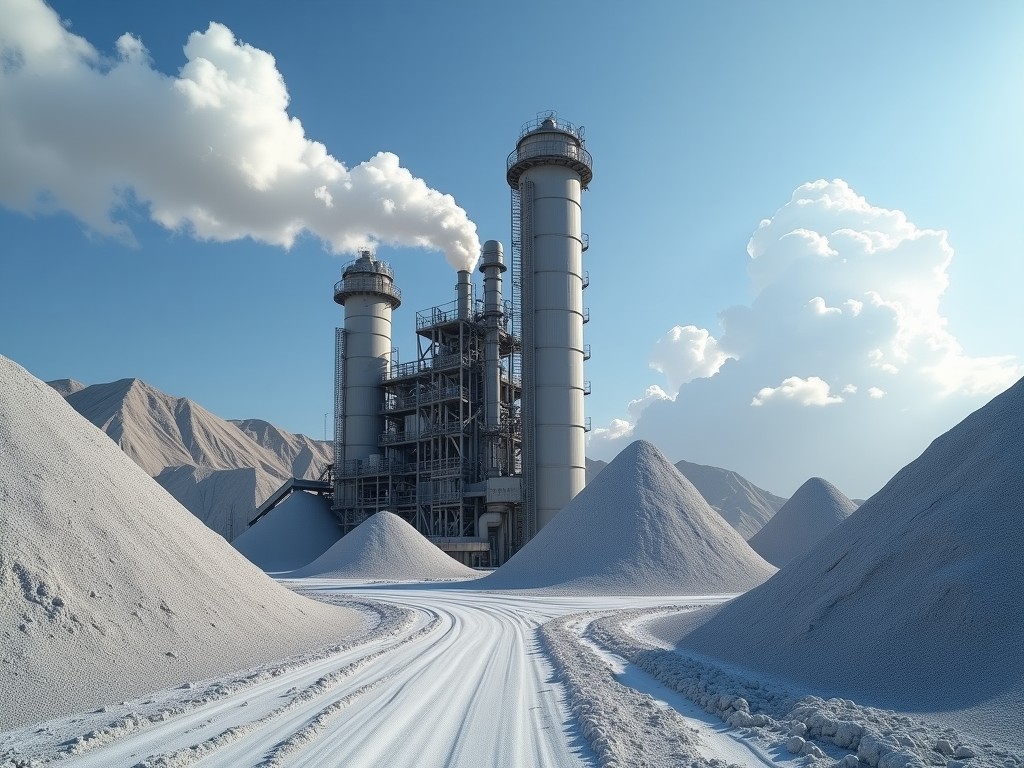
Cost Of Sodium Bentonite Factory
Cost of Sodium Bentonite Factory
Understanding the cost structure of a sodium bentonite production facility helps buyers evaluate total ownership cost and compare suppliers on a technical basis. This page outlines the material properties, manufacturing steps, and market factors that influence pricing.
Overview of Sodium Bentonite
Sodium bentonite is a natural clay composed primarily of the smectite mineral montmorillonite, which exhibits high swelling capacity and cation exchange when dispersed in water. It originates from volcanic ash deposits altered over geological time, resulting in a fine‑grained, absorbent material.
In industrial applications, the key performance traits are its ability to form viscous suspensions, seal porous media, and bind fine particles. These traits stem from the layered crystal structure that expands when hydrated, driving both functional value and cost considerations.
Material Properties and Typical Values
The following table shows typical ranges for key properties that affect processing behavior and end‑use performance. Exact values vary with deposit location and processing grade.
| Property | Typical Value | Unit | Relevance to Cost |
|---|---|---|---|
| Montmorillonite content | 70 – 90 | % | Higher purity reduces processing additives and improves yield. |
| Swelling index (ASTM D5890) | 18 – 25 | mL/2 g | Greater swelling increases value for sealing but may require tighter moisture control. |
| Fluid loss (API) | ≤ 15 | mL/30 min | Lower fluid loss is critical for drilling fluids, influencing specification premiums. |
| pH (10% slurry) | 8.5 – 9.5 | — | Alkaline pH affects compatibility with additives and may necessitate conditioning. |
| Moisture content (as‑received) | 8 – 12 | % | Higher moisture raises drying energy costs; tighter specs increase processing expense. |
| Particle size D50 | 2 – 6 | µm | Finer grades command higher milling energy and affect rheology. |
Manufacturing Process and Cost Drivers
Raw sodium bentonite is extracted via open‑pit mining, then crushed to reduce lump size before drying. Drying removes surface moisture to a target level, typically using rotary or fluidized‑bed dryers powered by natural gas or electricity.
After drying, the material is milled to achieve the desired particle size distribution. Milling energy is a major cost factor, especially for ultra‑fine grades required in drilling fluids. Blending with additives (e.g., polymers) may follow to tailor performance.
Key cost drivers include ore grade (higher montmorillonite content reduces waste), energy consumption for drying and milling, labor for plant operation, and transportation from mine to plant. Process optimization, such as heat recovery in dryers, can lower the per‑tonne cost.
Primary Applications and Economic Rationale
- Drilling fluids: sodium bentonite provides viscosity and suspension of cuttings, reducing formation damage. The ability to recycle fluid lowers overall mud cost, justifying a premium for high‑yield grades.
- Foundry sand bonding: the clay’s swelling and binding strength improve mold integrity, decreasing defects and reducing binder consumption.
- Civil engineering liners: when hydrated, bentonite forms a low‑permeability barrier used in ponds, landfills, and tunneling. Its self‑healing property cuts maintenance expenses over the structure’s life.
- Cat litter and absorbent products: high absorption capacity and clumping behavior translate to product efficiency, allowing lower usage per unit.
- Iron ore pelletizing: bentonite acts as a binder, increasing green pellet strength and reducing the need for alternative binders, which can lower overall pelletizing cost.
Quality Assurance and Testing
Industrial buyers rely on consistent specification compliance. Typical quality control includes sieve analysis for particle size, methylene blue capacity for cation exchange, swelling index tests, and fluid loss measurements per API or ASTM standards.
In‑house laboratories perform batch testing before shipment, and certificates of analysis are provided upon request. Traceability from mine lot to final lot supports auditability for regulated industries such as oil & gas.
Regular calibration of testing equipment and participation in proficiency programs help ensure that reported values reflect true material properties, reducing the risk of off‑spec deliveries.
Customization Options and Pricing Impact
- Particle size distribution: finer D50 increases milling energy and may raise price by 5‑15 % compared with standard grades.
- Moisture content control: delivering product at a lower moisture level (e.g., ≤ 5 %) adds drying cost, typically reflected in a 3‑7 % price uplift.
- Additive blending: polymer or surfactant coatings for enhanced fluid loss control introduce material and processing costs, often adding 10‑20 % to the base price.
- Packaging size: multi‑wall 25 kg bags versus bulk 1‑tonne sacks affect handling expenses; bulk packaging can reduce unit cost by approximately 8‑12 % for large volumes.
- Private labeling or custom logos: primarily a logistics consideration, with minimal impact on material cost but may involve additional setup fees.
Packaging, Logistics, and Lead Time
Standard packaging options include 25 kg multi‑wall paper bags with polyethylene inner liner, 50 kg valve bags, and bulk containers such as 1‑tonne super sacks or loose bulk in railcars. Palletization and stretch‑wrapping facilitate container loading.
Lead time depends on order volume and destination. For standard grades, typical production lead time is 2‑3 weeks after receipt of purchase order, with an additional 1‑2 weeks for ocean freight to major ports. Express air freight can reduce transit to 5‑7 days at higher cost.
Shipping documents, including bill of lading, certificate of analysis, and origin declaration, are prepared in accordance with INCOTERMS 2020 terms agreed upon with the buyer.
Frequently Asked Questions
- Can particle size be customized? Yes, milling parameters can be adjusted to meet specific D50 ranges; custom sizing may affect price and lead time.
- What information is required before quotation? Required details include desired grade (montmorillonite content), target particle size, moisture specification, quantity, packaging preference, and destination.
- What certifications are available? Commonly provided certificates include ISO 9001, API 13A for drilling mud, and REACH compliance where applicable; specific certifications can be confirmed per project.
- How is product quality inspected? Each lot undergoes sieve analysis, methylene blue capacity, swelling index, and fluid loss testing; results are documented in the certificate of analysis.
- What is the typical production lead time? For standard grades, lead time is typically 2‑3 weeks; customized specifications may extend this period by up to one week depending on complexity.
Get a Quote
To receive a detailed, no‑obligation quotation tailored to your specifications, please provide the information outlined above. Our technical team will review your requirements and return a comprehensive cost breakdown.