




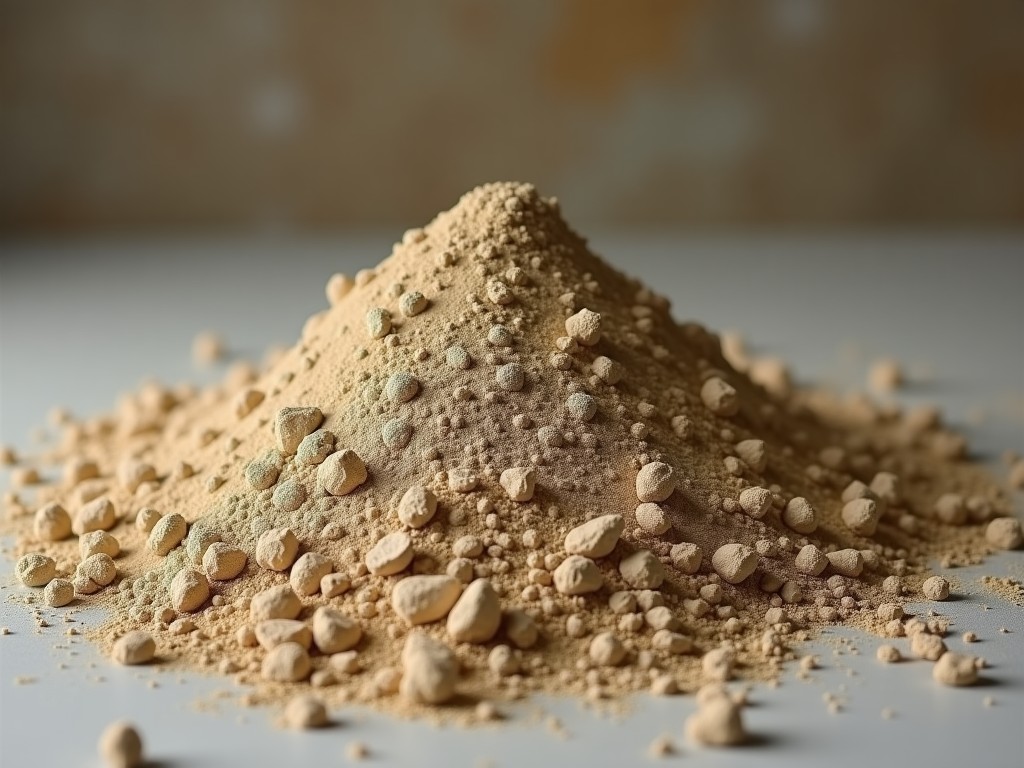
High Quality Bentonite Clay Factory
High Quality Bentonite Clay Factory
Bentonite is a naturally occurring absorbent aluminium phyllosilicate clay primarily composed of montmorillonite. It forms from the weathering of volcanic ash in marine environments, resulting in a layered structure that enables significant water uptake and ion exchange.
The material’s performance in industrial applications depends on measurable attributes such as particle size distribution, moisture content, swelling index, cation exchange capacity (CEC), pH, and loss on ignition (LOI). These parameters dictate viscosity, gel strength, filtration control, and binding capability in downstream processes.
Material Characteristics
Typical bentonite supplied for industrial use exhibits a d50 particle size between 2 µm and 10 µm after milling, with a specific surface area ranging from 400 m²/g to 800 m²/g. Moisture content is maintained below 12 % by weight to prevent clumping during storage and transport.
Swelling index, measured as the volume increase of 2 g of dry clay in 100 mL of distilled water after 24 h, generally falls between 12 mL/g and 20 mL/g for sodium‑activated grades. Cation exchange capacity typically ranges from 80 meq/100 g to 120 meq/100 g, reflecting the clay’s ability to adsorb cations such as Ca²⁺, Mg²⁺, and Na⁺.
pH of a 5 % slurry in deionized water is usually between 8.5 and 9.5, while loss on ignition at 1000 °C is under 8 %, indicating low organic content and high thermal stability for high‑temperature applications.
Manufacturing Process
Raw bentonite is extracted from selected deposits using controlled mining techniques that minimize overburden mixing. The ore is then coarsely crushed to reduce particle size to under 25 mm before undergoing sun‑drying or mechanical drying to reach target moisture levels.
Dried material is fed into a series of roller mills and air classifiers to achieve the desired particle size distribution. Sodium activation, when required, involves mixing the crushed clay with a precise amount of soda ash (Na₂CO₃) and agitating at elevated temperature to exchange calcium ions for sodium ions, thereby enhancing swelling properties.
Throughout the process, inline sensors monitor moisture, temperature, and particle size. Final product is stored in climate‑controlled silos to prevent moisture reabsorption before packaging.
Applications
In drilling fluids, bentonite provides viscosity and suspension properties that prevent cuttings from settling and help seal borehole walls. Its thixotropic behavior allows the fluid to be pumpable under shear yet form a gel when static, reducing fluid loss into permeable formations.
Foundries use bentonite as a binder for green sand molds because its wet tensile strength and thermal stability withstand molten metal pouring temperatures up to 1500 °C. The clay’s ability to release water uniformly during mold cooling minimizes defects such as cracks and inclusions.
Civil engineering projects incorporate bentonite slurry for diaphragm wall construction and tunneling, where its low permeability and self‑healing capacity stabilize excavations. In environmental remediation, bentonite serves as a liner material in landfills due to its high cation exchange capacity, which immobilizes heavy metals and organic contaminants.
Additional markets include cat litter, where its absorbent clumping action locks moisture and odors, and pelletizing of iron ore fines, where bentonite acts as a temporary binder that burns off during induration without leaving residue.
Technical Specifications
| Parameter | Typical Value | Test Method |
|---|---|---|
| d50 Particle Size | 2 µm – 10 µm | Laser Diffraction (ISO 13320) |
| Moisture Content | ≤12 % | Thermogravimetric (ASTM D2216) |
| Swelling Index | 12 mL/g – 20 mL/g | Free Swell (ASTM D5890) |
| Cation Exchange Capacity | 80 meq/100 g – 120 meq/100 g | Ammonium Acetate (ISO 11260) |
| pH (5 % slurry) | 8.5 – 9.5 | pH Meter (ASTM D4972) |
| Loss on Ignition (1000 °C) | ≤8 % | Thermogravimetric (ASTM D1102) |
Quality Assurance
Each production lot undergoes systematic testing at defined intervals: raw material inspection, in‑process particle size checks, and final product verification against the specification table above. Test results are recorded in a batch traceability system that links each container to its specific test report.
The facility maintains ISO 9001 certification for quality management and ISO 14001 for environmental management. Internal audits are conducted quarterly, and external surveillance audits occur annually to confirm ongoing compliance.
Quality control philosophy emphasizes preventive measures: raw material blends are adjusted based on upstream assay data, milling parameters are optimized in real time using laser diffraction feedback, and moisture content is regulated via controlled drying curves to avoid over‑drying or under‑drying.
Customization Options
Particle size grading can be tailored to meet specific rheological requirements, ranging from ultra‑fine (<2 µm) for high‑viscosity drilling muds to coarse (>15 µm) for rapid drainage in foundry sands. Adjustments are achieved by selecting appropriate mill screens and classifier cut points.
Moisture content is adjustable between 4 % and 10 % by weight through regulated drying cycles, enabling customers to select a product that balances flowability with storage stability.
Chemical modifications include sodium activation for enhanced swelling, calcium supplementation for reduced swell in low‑solid systems, and surface treatment with organic polymers to improve compatibility in non‑aqueous formulations.
Packaging formats are configurable: multi‑wall paper bags with polyethylene liner (25 kg), valve‑sealed polypropylene bags (50 kg), flexible intermediate bulk containers (FIBCs) of 1000 kg, and bulk pneumatic tanker loads for large‑scale consumers.
Packaging & Shipping
All packaging materials are selected for moisture barrier performance. Bags incorporate an inner polyethylene liner that limits water vapor transmission rate to under 0.5 g/m²·day at 38 °C and 90 % relative humidity, ensuring product integrity during transit and storage.
FIBCs are equipped with coated inner fabric and sealed spouts to prevent sifting and moisture ingress. Palletized loads are stretch‑wrapped with UV‑stabilized film and equipped with corner protectors to withstand standard handling equipment.
Shipping documents include a material safety data sheet (MSDS), certificate of analysis (CoA) specific to the batch, and packing list. For international shipments, the product is classified under HS code 2508.10 (natural bentonite) and complies with relevant IMDG and ADR regulations when applicable.
Frequently Asked Questions
Can dimensions be customized?
Yes. Particle size distribution, moisture content, and bulk density can be adjusted according to project requirements. Specify target d50, desired swelling index, or moisture level during quotation.
What information is required before quotation?
Provide the intended application, required performance specifications (e.g., viscosity, filtration loss, swell), quantity, delivery schedule, and any packaging preferences. This enables accurate formulation and pricing.
What materials are available?
We supply sodium‑activated, calcium‑natural, and organomodified bentonite grades. Custom blends can be developed to meet unique chemical or physical constraints.
How is quality inspected?
Each lot undergoes particle size analysis, moisture determination, swelling index test, CEC measurement, pH assessment, and loss on ignition. Results are documented in a CoA that accompanies the shipment.
What packaging methods are available?
Options include 25 kg multi‑wall paper bags with PE liner, 50 kg valve PP bags, 1000 kg FIBCs, and bulk pneumatic tanker loads. All selections include moisture‑barrier liners.
How are export shipments protected?
Shipments are palletized, stretch‑wrapped, and fitted with corner guards. Desiccant packets may be added upon request to control humidity within containers during long‑haul transit.
What is the typical production lead time?
Lead time varies from 2 weeks for standard grades to 4‑6 weeks for customized specifications, depending on raw material availability and production scheduling.
How are samples arranged?
Free sample quantities up to 2 kg are available upon request. Samples are packaged in sealed moisture‑barrier bags and dispatched via express courier with tracking.
Contact Us
For technical inquiries, quotation requests, or sample orders, please reach out to our sales engineering team. Provide your project details to receive a tailored solution that meets your performance and logistical requirements.