




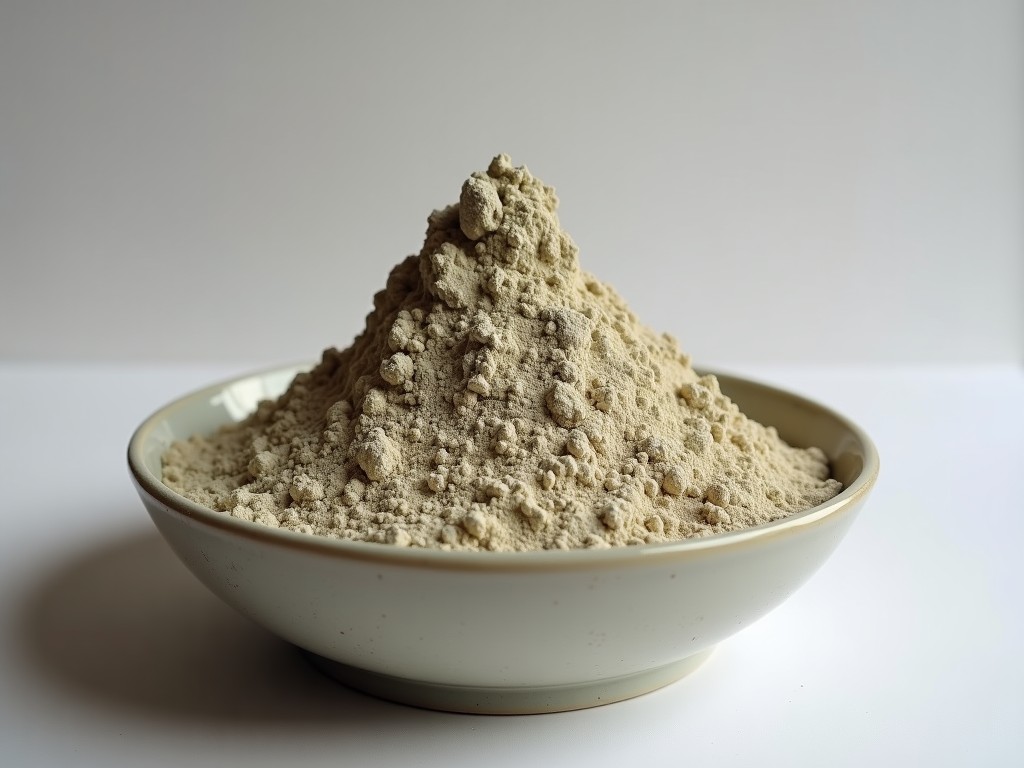
Oem Bentonite Clay Powder Where To Buy
OEM Bentonite Clay Powder – Where to Buy for Industrial Applications
Bentonite is a smectite clay primarily composed of montmorillonite, formed from volcanic ash alteration. In its powdered form it exhibits high surface area, cation exchange capacity, and reversible swelling when dispersed in water. OEM suppliers provide this material milled to specific particle grades and moisture levels tailored to downstream processing requirements.
Procurement engineers evaluate bentonite powder based on measurable parameters that directly affect performance in formulations such as drilling fluids, foundry molds, cat litter, and pharmaceutical excipients. Understanding these parameters reduces risk of batch failure and ensures consistent product behavior across production runs.
Technical Characteristics
Particle size distribution is typically reported as D50 ranging from 2 µm to 20 µm depending on the milling grade, influencing viscosity development and sedimentation rate. Moisture content after drying is usually held below 10 % wt to prevent premature hydration during storage.
The pH of a 5 % wt aqueous suspension generally falls between 8.5 and 9.5, reflecting the alkaline nature of exchanged sodium cations. Swelling index, measured as the volume increase of 2 g of powder in 100 mL water after 24 h, commonly spans 8 mL to 15 mL per gram, indicating the thickness of the hydrated layer achievable.
Cation exchange capacity (CEC) for sodium‑bent onite ranges from 70 meq/100 g to 100 meq/100 g, which governs its ability to adsorb ions and modify fluid rheology. Loss on ignition (LOI) at 1000 °C, representing organic and volatile content, is typically under 5 % wt for high‑purity grades.
Typical Applications and Functional Benefits
In water‑based drilling fluids, bentonite provides viscosity control and hole‑cleaning capability through its thixotropic gel structure; the required yield point is directly correlated to the powder’s swelling index and CEC.
Foundry operations utilize bentonite as a binder for sand molds because its dry compressive strength develops upon heating, a property linked to the amount of exchangeable sodium and the uniformity of particle size.
As a filler in cat litter, the powder’s high absorbency and clumping behavior stem from rapid water uptake and inter‑particle bonding, both functions of the moisture content and particle surface area.
- Drilling mud viscosity and suspension stability
- Foundry sand bonding and mold integrity
- Pet litter absorbency and clumping
- Pharmaceutical and cosmetic rheology modifier
- Sealant and grout thickening agent
Quality Control and Testing
Incoming material is screened for particle size using laser diffraction, with results compared against the agreed D50 and distribution span. Moisture is determined by loss on drying at 105 °C according to ASTM D2216.
pH and CEC are measured in distilled water suspensions using calibrated electrodes and the ammonium acetate method, respectively. Swelling capacity follows the ASTM D5890 procedure, providing a repeatable metric for gel formation.
Batch-to-batch consistency is verified through LOI and sulfur content analysis; any deviation beyond the stipulated tolerance triggers a hold and investigation before release.
Typical Specification Ranges
| Property | Typical Value | Test Method |
|---|---|---|
| D50 (µm) | 2 – 20 (grade dependent) | Laser diffraction (ISO 13320) |
| Moisture (% wt) | < 10 | ASTM D2216 |
| pH (5 % suspension) | 8.5 – 9.5 | Electrometric (ASTM D1293) |
| Swelling index (mL/g) | 8 – 15 | ASTM D5890 |
| CEC (meq/100 g) | 70 – 100 | Ammonium acetate (ASTM D7503) |
| Loss on ignition (% wt) | < 5 | Thermal gravimetric (ASTM D2584) |
Customization Options
- Tailored particle size grading (e.g., D50 < 5 µm for fine coating applications)
- Moisture content adjustment via controlled drying or humidification
- Blending with polymers or additives to modify gel strength or fluid loss
- Surface treatment with organophilics for oil‑based systems
- Private labeling and customized packaging formats
Packaging and Shipping
Standard packaging includes multi‑wall polypropylene bags with inner polyethylene liner, available in 25 kg net weight. For bulk shipments, flexible intermediate bulk containers (FIBCs) of 500 kg or 1 t capacity are offered, equipped with moisture‑barrier liners and lift loops.
Palletized loads are stretch‑wrapped and corner‑protected to prevent shifting during transit. All shipments comply with ISPM‑15 wood‑packaging regulations when applicable, and documentation includes material safety data sheets (MSDS) and certificate of analysis (CoA).
Frequently Asked Questions
Can the particle size distribution be customized? Yes, milling parameters are adjusted to meet specific D50 and span requirements; samples are evaluated before full‑scale production.
What information is needed for a quotation? Required details include target particle size, moisture content, order quantity, packaging preference, and destination for freight calculation.
Which quality tests are performed on each batch? Every batch undergoes laser diffraction particle sizing, moisture loss on drying, pH, CEC, swelling index, and loss on ignition testing.
How are export shipments protected against moisture? Inner polyethylene liners within bags or FIBCs provide a barrier; desiccant packs can be added upon request for long‑duration transit.
What is the typical lead time? Lead times vary from 2 weeks for stock grades to 4‑6 weeks for customized specifications, confirmed at quote stage.
Are samples available for evaluation? Yes, 200 g to 1 kg samples can be dispatched after technical agreement on the desired specifications.