




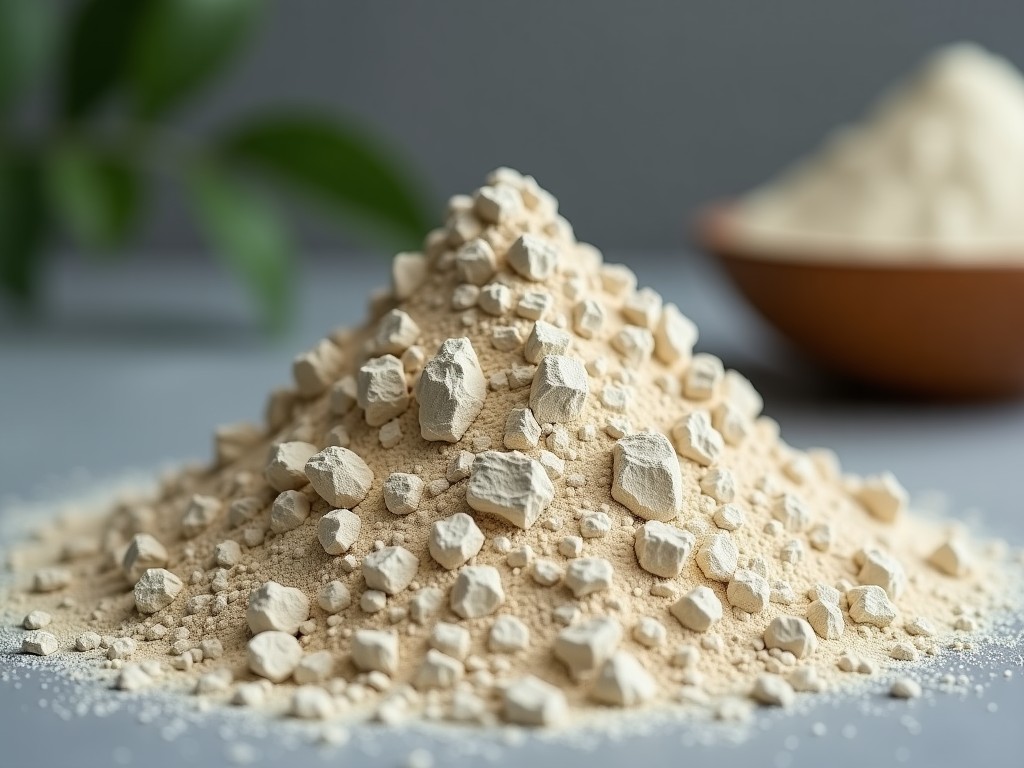
Oem Sodium Bentonite Clay Powder Uses
OEM Sodium Bentonite Clay Powder Uses
Sodium bentonite is a naturally occurring smectite clay derived from volcanic ash alteration, characterized by a high montmorillonite content that confers strong swelling and water‑absorption capabilities. In its powdered form the material disperses readily in aqueous systems, forming a thixotropic gel whose viscosity can be tuned by concentration and ion exchange.
OEMs incorporate sodium bentonite powder as a functional additive where controlled rheology, sealability, or impurity scavenging is required, allowing precise formulation adjustments without altering base chemistry.
Overview of Sodium Bentonite Clay Powder
The active fraction consists chiefly of montmorillonite platelets bearing exchangeable sodium ions, which drive the clay’s characteristic swell index of 15‑25 mL/g when immersed in deionized water. Minor constituents include quartz, feldspar, and trace metal oxides that influence abrasiveness and pH buffering.
Chemical Composition
Typical oxide analysis shows SiO₂ ranging from 55‑65 wt %, Al₂O₃ from 18‑22 wt %, Fe₂O₃ below 3 wt %, and Na₂O between 2‑4 wt %. Loss on ignition (LOI) generally falls between 8‑12 wt %, reflecting chemically bound water and organic residues.
Physical Properties
| Property | Typical Value | Test Method |
|---|---|---|
| Moisture content | 8‑12 % | ASTM D2216 |
| pH (10 % slurry) | 8.5‑9.5 | ASTM D4972 |
| Swell index | 15‑25 mL/g | ASTM D5890 |
| Apparent density | 0.6‑0.8 g/cm³ | ASTM D5057 |
| Particle size (D50) | 15‑30 µm | Laser diffraction |
These parameters directly influence performance in drilling muds, where higher swell index yields better hole‑sealing, and in foundry sands, where controlled moisture prevents mold cracking.
Typical Applications
In oil‑based drilling fluids, sodium bentonite provides viscosifying and filtration‑control properties that reduce torque and prevent formation damage, allowing deeper penetration with fewer additives.
Foundry operations use the clay as a binder for green sand molds; its water‑absorption creates a cohesive matrix that withstands thermal cycling while permitting easy shakeout.
Civil engineering projects employ bentonite slurry for diaphragm walls and tunneling, where its low permeability and self‑healing ability limit groundwater ingress.
Cat‑litter manufacturers value the rapid clumping and odor‑trapping capacity, which stems from the clay’s high cation exchange capacity and surface area.
Processing & Handling
The powder should be stored in a dry environment below 25 °C to prevent premature hydration; sealed multi‑wall bags with inner polyethylene liners maintain moisture content within specification. During dispensing, gentle aeration avoids agglomeration and ensures uniform feed rates into mixers.
When preparing slurries, slow addition under constant agitation prevents localized gel formation, yielding a homogeneous dispersion after 10‑15 minutes of shear.
Quality Control
Each lot undergoes routine testing for montmorillonite content via X‑ray diffraction, moisture loss on ignition, and swell index using standardized fluid loss cells. Batch traceability is retained through recorded raw‑source identifiers and production timestamps.
Statistical process control charts monitor key parameters, enabling early detection of drift in particle size distribution or pH that could affect end‑use performance.
Customization Options
OEMs may request adjustments to particle size (e.g., finer <10 µm for coating applications) or moisture level (dry‑blend <5 % for extrusion). Surface modification with organic surfactants can tailor hydrophobicity for specific polymer matrices.
pH adjustment through acid or base washing is available to meet stringent corrosion‑inhibition specifications in water‑treatment formulations.
Packaging Options
Standard packaging includes 25 kg multi‑wall paper bags with inner polyethylene liners, palletized for stretch‑wrapped shipment. For bulk consumers, 1 tonne flexible intermediate bulk containers (FIBCs) with spout tops facilitate pneumatic transfer.
Custom labeling, bar‑coding, and lot‑specific documentation can be arranged upon request to support traceability in regulated industries.
Frequently Asked Questions
Can the particle size distribution be customized?
Yes, jet‑milling or air‑classification can produce grades ranging from coarse >100 µm for filtration media to sub‑5 µm for nanocomposite reinforcement.
What information is required before quotation?
Target application, required swelling index, moisture tolerance, order volume, and preferred packaging type enable accurate pricing and lead‑time estimation.
How is product quality verified for each shipment?
Every batch ships with a certificate of analysis covering montmorillonite %, LOI, pH, swell index, and particle size D50, all tested per ASTM standards.
Contact our technical team to discuss OEM specifications, request samples, or initiate a quotation.