




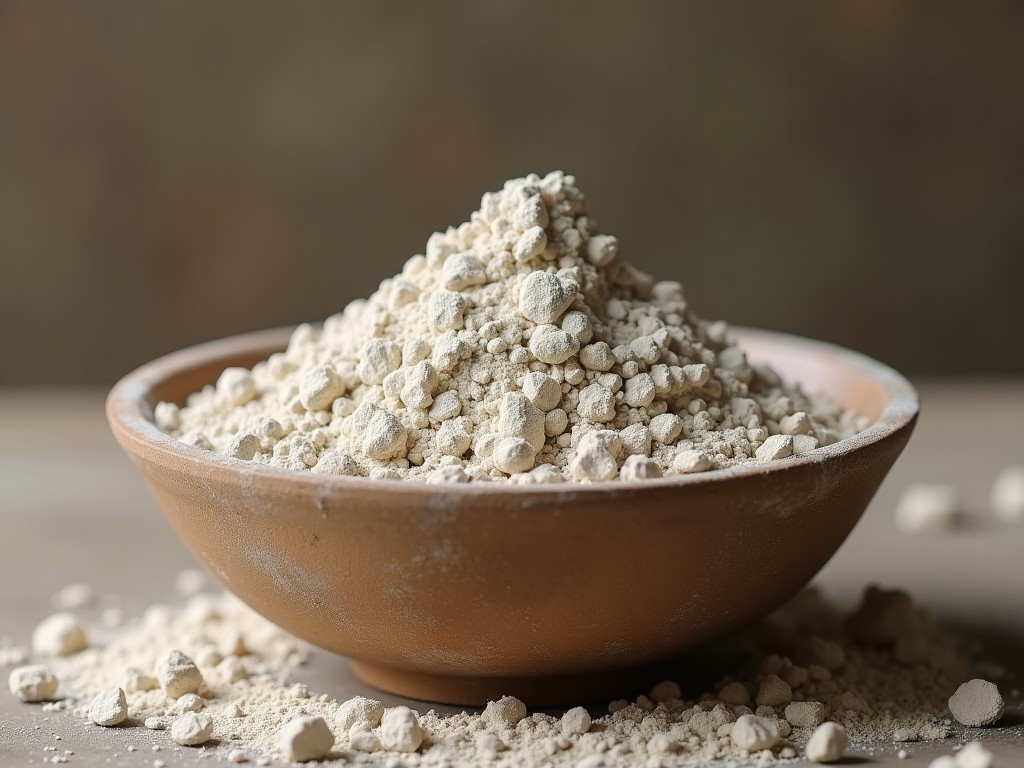
What Can You Use Bentonite Clay For
Bentonite Clay: Industrial Applications and Uses
Bentonite is a smectite clay primarily composed of montmorillonite, known for its ability to absorb water and swell, forming a gel‑like structure. This behavior stems from the layered crystal structure and exchangeable cations between the plates. Understanding these characteristics helps engineers select the right grade for sealing, drilling, or binding processes.
Key Properties Influencing Application
The swell index, measured as the volume increase after hydration, typically ranges from 12 to 25 mL / g for sodium‑bentonite. Calcium‑bentonite exhibits lower swell, around 5 to 12 mL / g, making it suitable where less expansion is desired. Cation exchange capacity (CEC) varies between 70 and 110 meq / 100 g, influencing the clay’s ability to adsorb ions in wastewater treatment.
Plasticity index and liquid limit determine the clay’s workability when mixed with water; values of 300‑500 % and 400‑600 % respectively are common for high‑swell grades. These rheological properties affect pumpability in grout mixtures and the stability of slurry walls.
Primary Industrial Applications
- Drilling fluid additive – the swelling creates a viscous, shear‑thinning mud that suspends cuttings and seals borehole walls, reducing fluid loss.
- Foundry sand binder – when mixed with silica sand, bentonite provides green strength and hot strength, allowing molds to withstand molten metal impact.
- Civil engineering sealant – hydrated bentonite forms low‑permeability barriers in landfill liners, pond liners, and cutoff walls, limiting contaminant migration.
- Pelletizing aid – in iron ore pelletization, bentonite acts as a binder that improves pellet compressive strength during induration.
- Wastewater treatment – the high CEC enables adsorption of heavy metals and ammonium, while the swollen mass can trap suspended solids.
Technical Specifications
| Property | Typical Value | Unit | Note |
|---|---|---|---|
| Swelling Index (Na‑Bentonite) | 15‑22 | mL / g | Measured after 24 h hydration |
| Cation Exchange Capacity | 85‑100 | meq / 100 g | Depends on Na‑content |
| pH (10 % slurry) | 8.5‑9.5 | – | Typical for natural Na‑bentonite |
| Moisture Content (as‑received) | 8‑12 | % | Air‑dry basis |
Customization and Processing Options
Bentonite can be processed to meet specific performance requirements. Dry‑screening yields grades ranging from fine powder (< 75 µm) to coarse granules (2‑5 mm) for different mixing efficiencies. Sodium activation—exchange of Ca²⁺ for Na⁺ using soda ash—increases swell index and viscosity, benefiting drilling mud formulations. For applications demanding lower swell, acid activation or calcium enrichment reduces montmorillonite layer charge, yielding a more stable, less expansive product.
Additives such as polymers or cross‑linkers can be blended to modify gel strength or reduce fluid loss in high‑temperature environments. Thermal treatment (calcination) at 500‑600 °C removes interlayer water, producing a calcined clay with higher melting point for refractory use.
Quality Control and Testing
Routine testing follows ASTM standards: D2216 for moisture content, D422 for grain‑size distribution, D4318 for liquid limit and plasticity index, and D5890 for swell index. Batch records include chemical analysis (SiO₂, Al₂O₃, Fe₂O₃) via XRF to confirm mineral purity. Consistent quality ensures predictable performance in critical barriers and drilling fluids.
Frequently Asked Questions
- Can dimensions be customized? Yes, particle size distribution and bulk density can be adjusted per project specifications; consult technical sales for available ranges.
- What information is required before quotation? Desired application, required swell index or viscosity, quantity, delivery timeline, and any special treatment (e.g., sodium activation, granulation).
- How is quality inspected? Each lot undergoes swell index, pH, moisture, and particle size testing; certificates of analysis are provided upon request.
- What packaging methods are available? Multi‑wall paper bags (25 kg), bulk bags (500 kg), and pneumatic tanker shipment for large volumes.
For further technical assistance or to request a sample, please contact our engineering team.