




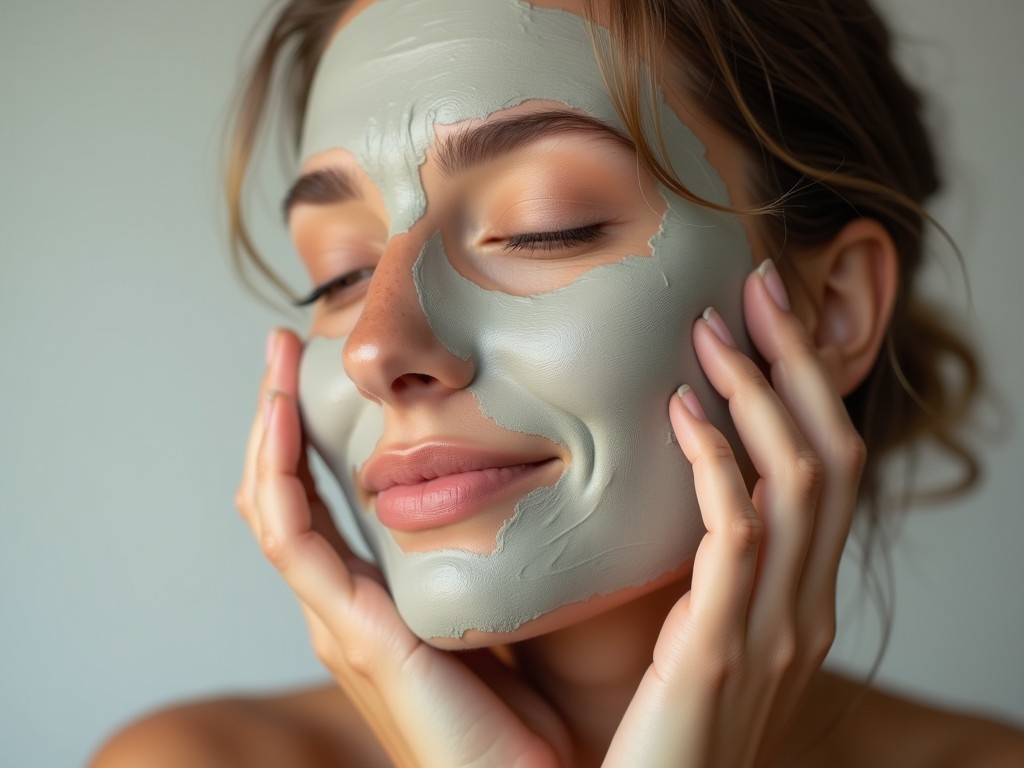
What Does Bentonite Clay Do For Skin
Bentonite Clay for Skin Applications: Technical Overview
Bentonite clay is a naturally occurring smectite mineral whose primary constituent is montmorillonite, a phyllosilicate with a 2:1 layered structure. The layers consist of an octahedral alumina sheet sandwiched between two tetrahedral silica sheets, creating a plate-like morphology with a high aspect ratio. This crystalline arrangement imparts significant surface area and ion exchange capacity, which are central to its functional behavior in dermal systems.
When dispersed in aqueous media, the individual platelets can separate, allowing water molecules to intercalate between the layers. This swelling phenomenon expands the interlayer spacing from approximately 1 nm in the dry state to several nanometers when hydrated, depending on electrolyte concentration and pH. The degree of swelling is quantifiable through volumetric strain measurements and directly influences the clay’s rheological properties.
The swollen gel exhibits thixotropic behavior, yielding a low shear viscosity that recovers structure upon rest. This property enables the formation of stable suspensions that can trap particulates and deliver active ingredients in a controlled manner. The yield stress of typical bentonite dispersions ranges from 5 to 20 Pa, a value adjustable via solids concentration and pH modulation.
In skin‑contact formulations, bentonite functions primarily as an adsorbent and rheology modifier. Its adsorption mechanism relies on electrostatic attraction and van der Waals forces between the negatively charged clay surfaces and positively charged species such as toxins, excess sebum, or microbial metabolites. The cation exchange capacity (CEC) of commercial grades typically falls between 80 and 120 meq/100 g, providing a measurable indicator of adsorption potential.
Beyond adsorption, the clay’s barrier‑forming capability contributes to occlusive effects that reduce transepidermal water loss (TEWL). When applied as a thin film, the dried clay layer creates a semi‑impermeable membrane that slows vapor transmission, a characteristic measurable via standardized water vapor transmission rate (WVTR) tests.
Key Functional Attributes
- Specific surface area: 50–80 m²/g (BET)
- Swelling index (volume increase after 24 h immersion): 8–12 g water/g dry clay
- pH of 5 % aqueous dispersion: 8.5–9.5
- Loss on drying (105 °C, 2 h): <12 %
- Particle size (d₅₀): 2–5 µm (laser diffraction)
Typical Specifications
| Parameter | Typical Range | Test Method |
|---|---|---|
| Montmorillonite content | ≥85 % | X‑ray diffraction (XRD) |
| Cation exchange capacity (CEC) | 80–120 meq/100 g | Ammonium acetate method |
| Swelling volume (2 h, deionized water) | 10–15 mL/g | ASTM D422 |
| Residue on sieve (75 µm) | ≤1 % | ISO 3310‑1 |
| Heavy metals (Pb, As, Cd, Hg) | <10 ppm each | ICP‑MS |
Handling, Storage, and Safety
Bentonite clay is chemically inert under ambient conditions and does not undergo hazardous reactions. However, its fine particulate nature necessitates dust control measures during transfer and mixing to prevent inhalation exposure. Recommended personal protective equipment includes NIOSH‑approved N95 respirators and safety goggles.
For storage, keep the material in a dry, temperature‑stable environment (10 °C–30 °C) within sealed containers to avoid moisture uptake that could alter its rheological properties. Shelf life exceeds 24 months when stored according to these guidelines, with periodic verification of pH and swelling index advised for long‑term inventory.
Safety data sheets confirm non‑irritant status for intact skin, though prolonged exposure to high‑concentration pastes may cause transient drying. Formulators should conduct patch testing per ISO 10993‑10 to verify compatibility with specific end‑use products.
Frequently Asked Questions
Can the particle size distribution be customized for specific formulation needs?
Yes. Milling and classification services are available to adjust d₅₀ within the 1–10 µm range, enabling optimization for either rapid adsorption (finer grades) or enhanced suspension stability (coarser grades).
What information is required to receive a quotation or technical datasheet?
A brief description of the intended application, target concentration, and any required certifications (e.g., cosmetic grade, ISO 9001) allows our technical team to provide accurate pricing and relevant documentation.
How is product quality verified before shipment?
Each batch undergoes routine testing for montmorillonite content, CEC, swelling volume, and heavy‑metal limits. Results are recorded in a certificate of analysis that accompanies every shipment.
Technical Support and Sample Requests
For detailed formulation guidance, sample evaluation, or to discuss custom processing options, contact our applications engineering team via the link below.