




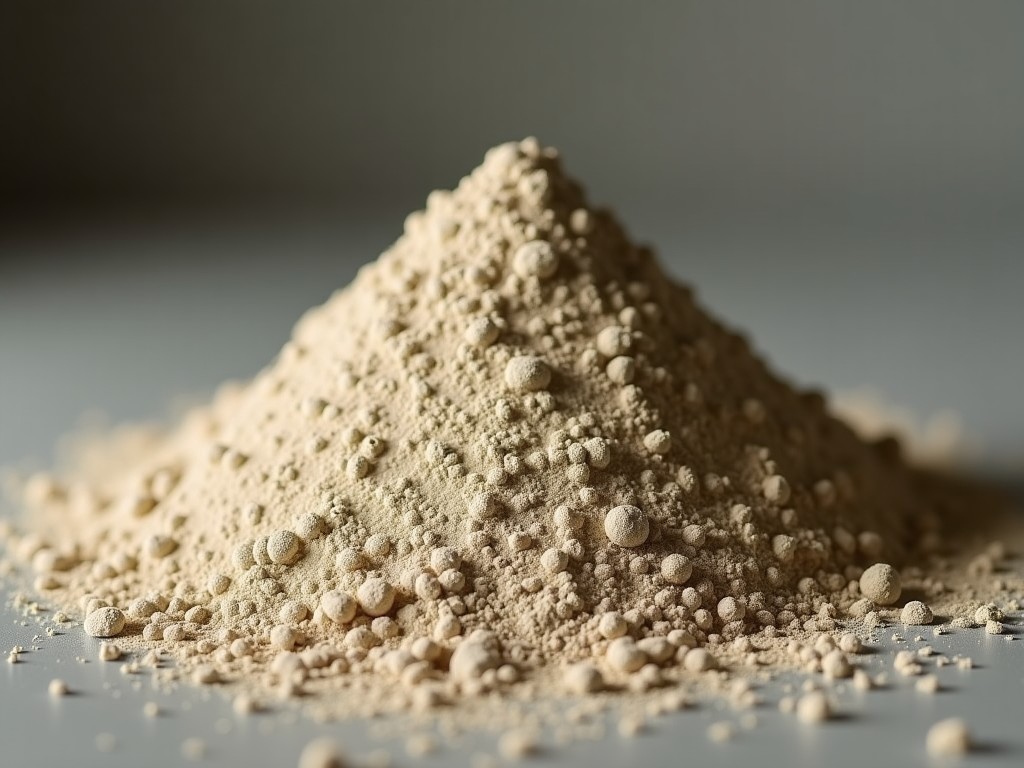
What Is Bentonite Clay Powder Used For
Bentonite Clay Powder – Industrial Applications and Technical Characteristics
Bentonite is a naturally occurring clay composed primarily of montmorillonite, a layered aluminosilicate mineral that exhibits pronounced swelling and cation exchange capabilities when dispersed in water. These physicochemical traits determine its suitability across a range of industrial processes where viscosity control, sealing, or adsorption is required.
Primary Industrial Uses
In oil and gas drilling, bentonite powder is mixed with water to form a viscous slurry that suspends cuttings, stabilizes borehole walls, and provides hydrostatic pressure to prevent fluid influx. The thixotropic nature of the gel allows it to remain fluid under pump shear yet regain viscosity when static, reducing lost circulation. Typical concentrations range from 3 to 6 wt% depending on formation characteristics.
In foundry operations, bentonite acts as a binder for green sand molds, imparting sufficient compressive strength to withstand molten metal pouring while allowing easy shakeout after cooling. Its ability to absorb water and develop interlocking bonds between sand grains results in mold hardness values typically between 70 and 90 RB. Reclaimed sand systems often require periodic bentonite addition to maintain consistent binder performance.
Civil engineering applications exploit bentonite’s low permeability when hydrated, using it as a sealant in slurry walls, landfill liners, and pond linings. A bentonite‑water mixture with a solids content of approximately 10 % can achieve hydraulic conductivities below 1×10⁻⁹ m/s, meeting stringent containment standards. The material’s self‑healing property allows minor punctures to swell and reseal under hydrostatic pressure.
Key Material Properties
The active component, montmorillonite, typically constitutes 60‑90 % of the bulk material, with the remainder consisting of accessory minerals such as quartz, feldspar, and calcite. Particle size distribution is commonly controlled to a d₅₀ of 2‑5 µm, ensuring rapid dispersion and uniform rheology in aqueous suspensions. Swelling capacity, measured as the volume increase of a 2 g sample in 100 mL deionized water after 24 h, generally falls between 12 and 20 mL/g. Cation exchange capacity (CEC) ranges from 70 to 120 meq/100 g, reflecting the material’s ability to adsorb cations such as Ca²⁺, Mg²⁺, and Na⁺.
| Property | Typical Value | Unit | Test Method |
|---|---|---|---|
| Montmorillonite Content | 60‑90 | wt % | X‑ray diffraction (XRD) |
| Particle Size (d₅₀) | 2‑5 | µm | Laser diffraction |
| Swelling Capacity | 12‑20 | mL/g | ASTM D5890 |
| Cation Exchange Capacity | 70‑120 | meq/100 g | AMETEK Brookfield CEC |
| pH (10 % slurry) | 8.5‑9.5 | – | Electrometric (pH meter) |
| Moisture Content | 8‑12 | wt % | Thermogravimetric (105 °C) |
| Loss on Ignition (LOI) | 5‑10 | wt % | ASTM D2216 |
| Apparent Density | 0.5‑0.7 | g/cm³ | ASTM D7263 |
Quality Control and Consistency
Each production lot undergoes systematic testing for montmorillonite content, particle size distribution, and swelling capacity to verify conformity with the specified ranges. Statistical process control charts track key parameters such as d₅₀ and CEC, enabling early detection of drift in raw material attributes. Certificates of analysis accompany shipments, reporting actual measured values alongside the typical limits.
Customization Options
Particle size can be adjusted through milling or classification to meet specific rheological requirements, with finer grades (<2 µm) enhancing sealing performance and coarser grades improving sand permeability in foundry blends. Moisture content is regulated via drying schedules to prevent premature hydration during storage and transport. Optional additives such as polymers or inorganic salts can be blended to modify pH, increase thermal stability, or reduce synergistic interactions with contaminants.
Frequently Asked Questions
- Can the particle size distribution be customized? Yes, milling and air classification allow adjustment of d₅₀ from 1 µm to 10 µm according to application needs.
- What information is required before quotation? Required details include intended use, target viscosity or swelling range, required particle size, moisture content limits, and order volume.
- How is quality inspected? Each batch is tested for montmorillonite content (XRD), particle size (laser diffraction), swelling capacity (ASTM D5890), and CEC, with results documented in a certificate of analysis.
- What packaging methods are available? Standard options are 25 kg multi‑wall paper bags, 500 kg bulk bags, and palletized super‑sacks; moisture‑barrier liners can be added upon request.