




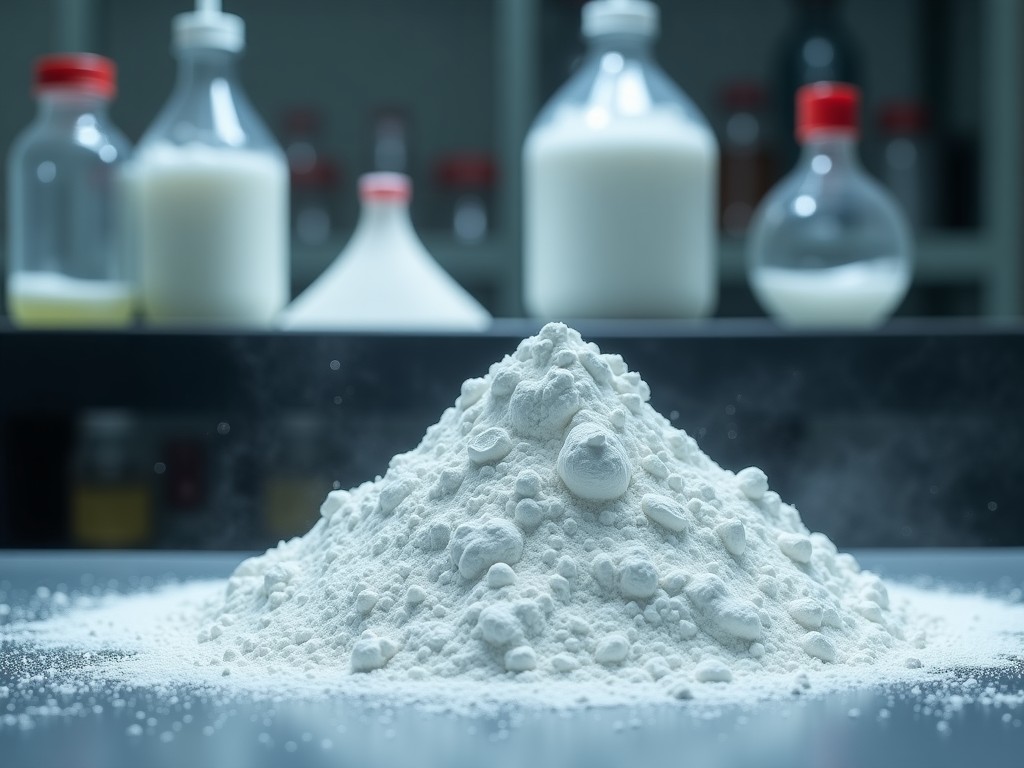
Diatomaceous Earth 50 Lb Factory
Diatomaceous Earth 50 lb Factory Grade
Naturally occurring sedimentary rock composed of fossilized diatoms, primarily amorphous silicon dioxide with a typical purity of 88‑92% SiO2.
Product Overview
Typically the material exhibits a bulk density of 0.20‑0.25 g/cm³ and a specific surface area ranging from 15 to 30 m²/g, depending on the grade and calcination level.
Technical Specifications
| Property | Typical Value | Unit | Test Method |
|---|---|---|---|
| Silicon Dioxide (SiO2) | 88‑92 | % | XRF |
| Loss on Ignition (LOI) | 5‑7 | % | ASTM C311 |
| Moisture Content | ≤0.5 | % | ASTM D2216 |
| pH (5% slurry) | 7‑9 | — | ASTM D1293 |
| Average Particle Size (D50) | 15‑25 | µm | Laser Diffraction |
Primary Industrial Applications
Due to its high porosity, inertness, and abrasive consistency, the material serves as a functional filler and filter medium in processes where chemical resistance and precise particle retention are required.
- Filtration of beverages, oils, and fine chemicals – the porous structure captures particulates while allowing high flow rates.
- Absorbent for spill control and industrial cleaning – low bulk density enables rapid uptake of liquids without leaching.
- Carrier for pesticides and fertilizers – uniform particle size ensures even distribution and controlled release.
- Abrasive in polishing compounds – consistent hardness provides repeatable surface finishing.
- Insulation filler in lightweight concretes – low thermal conductivity contributes to energy‑saving building materials.
Packaging and Handling
Standard factory grade is supplied in 50 lb (22.7 kg) multi‑wall paper bags with an inner polyethylene moisture barrier, stacked on 40″ × 48″ pallets, each pallet holding 48 bags for a net load of approximately 2,400 lb.
Store in a dry, covered area; avoid exposure to excessive humidity to maintain flow properties and prevent caking.
Quality Control
Each lot undergoes systematic testing for silica content, loss on ignition, particle size distribution, and trace heavy metals to meet industry specifications for filtration and absorbent applications.
Sampling follows ASTM C702 procedures, with results documented in a certificate of analysis accompanying every shipment.
Customization Options
Calcination temperature can be adjusted to modify surface hardness and pore structure, yielding grades optimized for either high‑flow filtration or increased absorbent capacity.
Particle size classification is available through air‑jet sieving to produce narrower distributions, such as D50 < 10 µm for fine polishing or D50 > 40 µm for rapid drainage.
Surface treatments, including silanization, can be applied upon request to enhance compatibility with polymeric matrices.
Frequently Asked Questions
Contact for Inquiry
To request a quotation, sample, or detailed technical data sheet, please complete the form linked below or reach out directly to our sales team.