




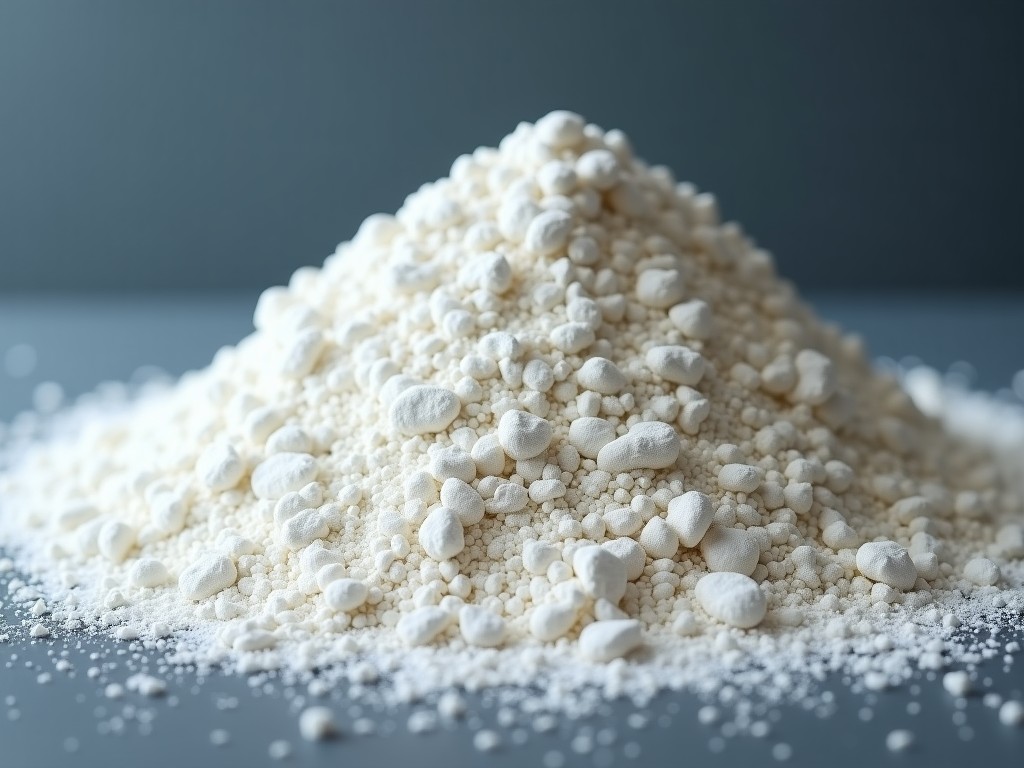
Diatomaceous Earth Bulk Suppliers
Diatomaceous Earth Bulk Supply
Diatomaceous earth (DE) is a naturally occurring siliceous sediment formed from the fossilized remains of diatoms, a type of hard‑shelled algae. The primary constituent is amorphous silicon dioxide (SiO₂), typically ranging from 80% to 94% depending on the deposit and processing method. Trace amounts of aluminum oxide, iron oxide, and other minerals are present, influencing the material’s color and chemical behavior.
Overview
Bulk DE is supplied in several physical forms to match downstream processing needs. Raw, uncalcined grades retain the natural frustule structure and exhibit high porosity. Flux‑calcined grades undergo controlled heating with a flux agent, which increases sintering of the frustules and reduces surface area while enhancing mechanical strength. Milled powders are produced by grinding to achieve specific particle size distributions for use as fillers or absorbents.
Chemical Composition
Chemically, DE is dominated by SiO₂ in an amorphous state, which confers chemical inertness in most environments. Typical loss on ignition (LOI) values fall between 4% and 8%, reflecting bound water and organic residues. The pH of a 10% aqueous suspension usually measures near neutral, ranging from 6.5 to 7.5, making it compatible with acidic and alkaline formulations. Minor constituents such as Al₂O₃ (0.5%‑2%) and Fe₂O₃ (0.2%‑1.5%) are reported via ICP‑OES analysis and can affect coloration and catalytic properties.
Physical Properties
Key physical characteristics that guide selection include particle size distribution, specific surface area, bulk density, and oil absorption capacity. These parameters are adjustable through milling, classification, and calcination conditions, allowing suppliers to tailor the material to precise performance specifications.
| Property | Typical Range | Test Method |
|---|---|---|
| Particle size D50 (µm) | 5 – 45 | Laser diffraction |
| Specific surface area (m²/g) | 15 – 65 | BET nitrogen adsorption |
| Bulk density (g/cm³) | 0.30 – 0.55 | ASTM C29 |
| Moisture content (% wt) | 0.5 – 3.0 | Loss on drying at 105 °C |
| pH (10% slurry) | 6.5 – 7.5 | Electrometric measurement |
| Loss on ignition (% wt) | 4.0 – 8.0 | Thermogravimetric analysis |
Typical Applications
The utility of DE stems from its combination of high porosity, abrasive texture, and chemical inertness. Each application leverages a specific subset of these properties.
- Filtration: The interconnected pore network provides high flow rates while capturing fine particulates; used in beverage clarification, swimming‑pool filters, and industrial wastewater treatment.
- Functional filler: Reinforces polymers, improves rheology in paints and coatings, and adds anti‑blocking properties to plastic films.
- Absorbent: High surface area and capillary action enable rapid uptake of oils, solvents, and spilled chemicals; common in spill kits and industrial floor‑dry products.
- Insecticidal agent: The sharp, abrasive particles damage the exoskeleton of insects, leading to dehydration; employed as a non‑chemical barrier in grain storage and livestock facilities.
- Carrier and diluent: Provides a free‑flowing matrix for active ingredients in agricultural chemicals, pharmaceuticals, and cosmetics.
Quality Assurance
Suppliers implement a multi‑stage verification protocol to ensure that each lot meets the agreed specifications. Particle size is monitored by laser diffraction at multiple points during milling. Surface area is assessed via BET analysis on representative samples. Chemical composition, including trace metals, is quantified using inductively coupled plasma optical emission spectrometry (ICP‑OES). Moisture content and loss on ignition are determined by thermogravimetric methods. All testing follows recognized standards such as ASTM, ISO, or internal procedures calibrated to reference materials.
Packaging & Handling
Bulk DE is commonly packaged in 25 kg multi‑wall paper bags, 500 kg polypropylene super‑sacks, or delivered loose in pneumatic tankers for silo storage. To prevent moisture uptake, bags are often lined with polyethylene film and stored under cover. During transfer, dust suppression techniques such as enclosed conveyors or local exhaust ventilation are recommended to maintain workplace air quality.
Frequently Asked Questions
Can the particle size distribution be customized?
Yes, milling and classification steps allow adjustment of D10, D50, and D90 values to match specific filtration or filler requirements.
What information is needed for a quotation?
Please provide the desired grade (raw, flux‑calcined, milled), target particle size range, estimated annual volume, and any special packaging or labeling requirements.
Which grades are available for food‑contact applications?
Food‑grade DE is offered as a low‑iron, low‑alkali product that meets FDA 21 CFR §184.1400 and EU Regulation (EC) No 1935/2004; certification documents are supplied upon request.
How is product consistency ensured between batches?
Statistical process control is applied to key parameters (particle size, LOI, moisture) and each lot is accompanied by a certificate of analysis showing compliance with the agreed specification sheet.
To discuss your specific needs or request a sample, please use the link below.
Request a Quote