




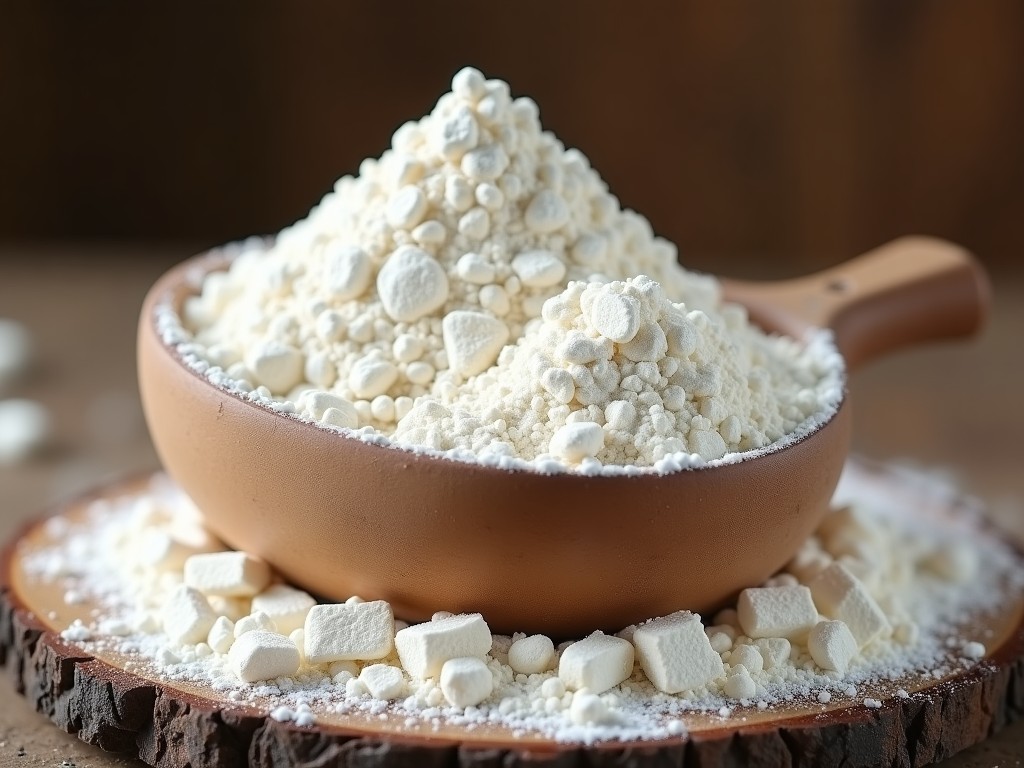
Diatomaceous Earth Powder Health Benefits Uses
Diatomaceous Earth Powder: Health Benefits and Industrial Uses
Diatomaceous earth powder originates from the fossilized silica shells of diatoms, microscopic algae that accumulated in ancient lakebeds.
The resulting material consists mainly of amorphous silicon dioxide, typically ranging from 85% to 95% SiO2, with trace amounts of aluminum oxide and iron oxide.
Composition and Physical Characteristics
Particle size distribution is controlled through milling and classification, yielding typical median diameters between 5 and 25 micrometers.
Bulk density usually falls between 0.2 and 0.4 g/cm³, reflecting the high porosity of the skeletal structure.
Surface area, measured by BET nitrogen adsorption, commonly ranges from 20 to 45 m²/g, providing ample sites for adsorption.
Health-Related Properties
In food processing, diatomaceous earth is employed as an anti‑caking agent to prevent clumping in powdered ingredients such as spices and flour.
Its absorbent capacity allows it to bind moisture and oils, which is utilized in formulations requiring moisture control, including certain dietary supplement tablets.
Because the silica is amorphous and chemically inert, it does not react with active pharmaceutical ingredients, making it suitable as a carrier or excipient.
Industrial Applications
The primary industrial use of diatomaceous earth is as a filtration aid in liquid processing, where its porous particles form a permeable cake that captures fine solids.
- Beverage clarification: acts as a filter aid to remove yeast and haze particles.
- Swimming pool water filtration: traps fine debris and algae spores.
- Oil and grease absorption: used in spill control kits and industrial absorbents.
- Carrier for pesticides and fertilizers: provides uniform distribution and reduces dust.
- Abrasive in toothpaste and polishing compounds: delivers mild mechanical action without damaging substrates.
- Insulating material in high‑temperature applications: leverages low thermal conductivity of porous silica.
- Filler in paints and coatings: improves viscosity control and film integrity.
Beyond liquid filtration, the abrasive nature of the milled powder finds application in metal polishing and surface preparation compounds.
Typical Technical Specifications
Standard specifications are derived from routine laboratory tests and are presented as typical values; actual grades can be adjusted according to project requirements.
| Property | Typical Value |
|---|---|
| SiO2 content (amorphous) | 85% – 95% |
| Loss on ignition (LOI) | 4% – 8% |
| Bulk density | 0.20 – 0.40 g/cm³ |
| Median particle size (D50) | 5 – 25 µm |
| Specific surface area (BET) | 20 – 45 m²/g |
| pH (10% slurry) | 8 – 10 |
| Moisture absorption capacity | Up to 1.5 times its weight |
Quality Control and Customization
Quality assurance begins with raw material verification using X‑ray diffraction to confirm the amorphous nature of the silica and to quantify any crystalline fractions.
Particle size is adjusted through controlled milling and air classification, allowing customization of D50 from 3 µm to 50 µm upon request.
Surface modification, such as silanization, can be applied to enhance hydrophobicity for specific oil‑absorption applications.
Frequently Asked Questions
- Can the particle size be customized? Yes, milling and classification steps allow adjustment of D50 within the range of 3–50 µm based on application needs.
- What information is required for a quotation? Required details include desired purity level, particle size distribution, order quantity, packaging preferences, and any specific surface treatments.
- Are both food‑grade and industrial grades available? Yes, separate grades are produced to meet FDA food additive specifications or industrial purity standards.
- How is product quality verified? Each batch undergoes chemical analysis (SiO2 content, LOI), particle size testing, and microbiological screening for food‑grade material.
- What packaging options are offered? Standard options include multi‑wall paper bags (25 kg), bulk FIBC bags, and customized retail‑size containers upon request.
Contact for Inquiry
To discuss specific requirements, request a sample, or obtain a formal quotation, please use the contact form.
Request a quotation