




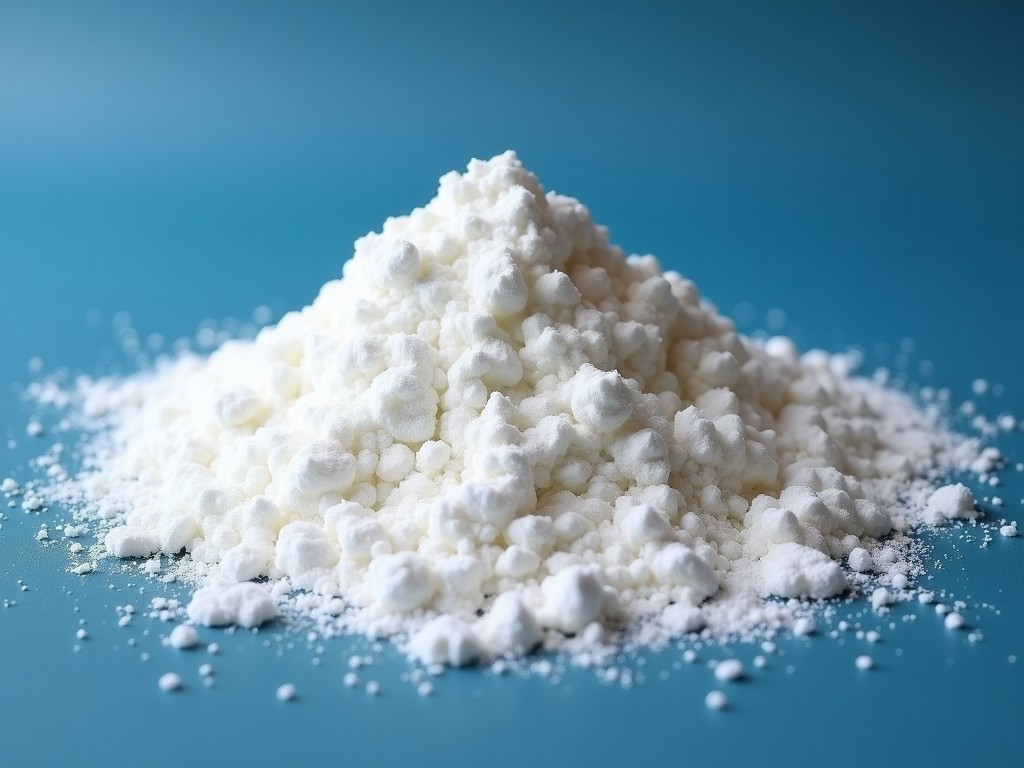
Diatomaceous Earth Products Factory Exporter
Diatomaceous Earth Products – Factory Export Overview
Diatomaceous earth is a naturally occurring siliceous sediment composed mainly of the fossilized frustules of diatoms. Its primary constituent is amorphous silicon dioxide, typically ranging from 85 % to 95 % by weight, with the remainder consisting of minor oxides such as Al₂O₃, Fe₂O₃, and TiO₂.
The raw ore is extracted from quarries, then crushed to reduce lump size before undergoing a drying stage to lower moisture content below 0.5 %. Subsequent milling in air‑classifying mills produces a fine powder whose particle size distribution can be tailored to meet specific grade requirements.
Product Grades and Typical Characteristics
Grades are differentiated by particle size, bulk density, and surface area, which influence performance in filtration, absorption, and carrier applications.
- Filter aid grade – D50 10‑15 µm, bulk density 0.22‑0.28 g/cm³, specific surface area 55‑65 m²/g.
- Absorbent grade – D50 20‑30 µm, bulk density 0.30‑0.38 g/cm³, oil absorption capacity ≥ 1.5 g/g.
- Filler grade – D50 5‑8 µm, bulk density 0.18‑0.24 g/cm³, suitable for polymer reinforcement.
- Insecticide carrier grade – D50 12‑18 µm, bulk density 0.25‑0.32 g/cm³, low moisture uptake.
These values are typical ranges; exact specifications can be adjusted according to project requirements through controlled milling and classification.
Application Rationale
In beverage clarification, the filter aid grade forms a porous cake that traps yeast and particulates while allowing liquid flow, owing to its high porosity and chemical inertness.
For spill containment, the absorbent grade’s irregular particle shape creates interstitial voids that retain hydrocarbons without chemical reaction, making it suitable for industrial floor sweeps.
When used as a filler in plastics, the fine filler grade improves stiffness and reduces shrinkage due to its high aspect ratio and uniform dispersion within the polymer matrix.
As a carrier for active ingredients, the insecticide carrier grade provides a large surface area for adsorption while maintaining flowability in dispensing equipment.
Quality Control Procedures
Each batch undergoes laser diffraction analysis to verify D10, D50, and D90 values against the agreed specification.
Loss on ignition is measured at 1000 °C to confirm organic content remains below 2 %, ensuring thermal stability in high‑temperature processes.
pH of a 10 % slurry is tested to stay within 7‑9, indicating minimal soluble alkali or acid content.
Heavy metal screening (Pb, Cd, As, Hg) is performed using ICP‑OES, with limits compliant with RoHS and REACH thresholds where applicable.
Export Packaging and Logistics
Products are packed in multi‑wall polypropylene bags with inner polyethylene liners to prevent moisture ingress during transit.
Bulk shipments utilize flexible intermediate bulk containers (FIBCs) equipped with UV‑stabilized fabric and discharge spouts for efficient handling.
All palletized loads conform to ISPM‑15 standards for wood packaging, and container stuffing includes desiccant bags to maintain relative humidity below 50 %.
Typical lead time from order confirmation to port readiness is 3‑4 weeks, depending on volume and final testing completion.
Frequently Asked Questions
Can particle size distribution be customized?
Yes, milling parameters and classifier settings are adjusted to achieve target D50 and span values as defined by the client’s specification.
What information is required before quotation?
Desired grade, required particle size range, estimated annual quantity, preferred packaging (bag size or FIBC), and destination port for freight calculation.
How is quality verified before shipment?
A pre‑shipment inspection report includes laser diffraction results, loss on ignition, pH, and heavy metal analysis, all performed on a representative sample from the batch.
What packaging options are available for overseas shipments?
Standard 25 kg or 50 kg multi‑wall bags, 500 kg or 1000 kg FIBCs with optional liners, and bulk container loading for granular grades.
How are export shipments protected against moisture?
Inner polyethylene liners, desiccant packets, and sealed container doors maintain low humidity; additionally, bags are stored on pallets with airflow channels.
Technical Comparison of Common Grades
| Property | Filter Aid | Absorbent | Filler | Carrier |
|---|---|---|---|---|
| Typical D50 (µm) | 10‑15 | 20‑30 | 5‑8 | 12‑18 |
| Bulk Density (g/cm³) | 0.22‑0.28 | 0.30‑0.38 | 0.18‑0.24 | 0.25‑0.32 |
| Surface Area (m²/g) | 55‑65 | 30‑40 | 45‑55 | 40‑50 |
| Loss on Ignition (%) | <1.5 | <2.0 | <1.5 | <1.8 |
To obtain a formal quotation or request a sample batch matching your specific process requirements, please contact our export department.
Submit Inquiry