




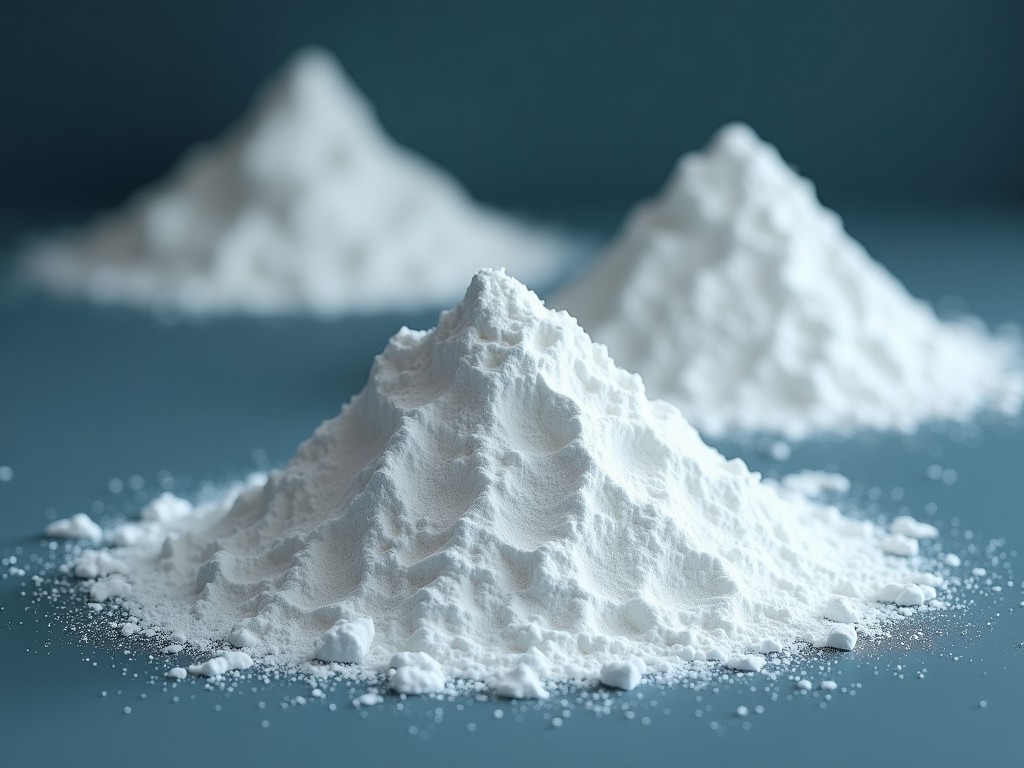
Types Of Diatomaceous Earth
Types of Diatomaceous Earth
Diatomaceous earth (DE) is a naturally occurring siliceous sediment formed from the fossilized frustules of diatoms, a group of microscopic algae. Its principal constituent is amorphous silicon dioxide (SiO₂), which typically comprises 80 %–94 % of the dry weight depending on the deposit and any subsequent thermal treatment. The material’s intricate honeycomb‑like microstructure yields high porosity, low bulk density, and a strong capacity to adsorb liquids and gases.
Because geological origin and processing conditions alter key attributes such as pore volume, particle size, and crystalline silica content, manufacturers sort DE into distinct types. This classification enables engineers to match a material’s performance characteristics to the demands of a specific industrial process.
Classification by Processing Method
Natural (uncalcined) DE is extracted, dried, milled, and air‑classified without exposure to elevated temperatures. It retains the original amorphous silica framework and generally exhibits a crystalline silica fraction below 1 %. Calcined DE undergoes controlled heating between 800 °C and 1000 °C, which expands the pore structure, reduces volatile matter, and can convert a small portion of amorphous silica to crystalline forms. Flux‑calcined DE adds a flux agent such as soda ash during the heating step, further increasing pore volume and lowering bulk density for applications that demand high flow rates.
Classification by Purity Grade
Food‑grade DE satisfies stringent limits for heavy metals (e.g., <10 mg/kg lead and arsenic) and passes microbial tests such as USP <61>. It is often derived from natural or low‑temperature calcined sources to keep crystalline silica minimal. Pool‑grade DE is typically heat‑treated to enhance hardness and sized for swimming‑pool filtration, where resistance to back‑wash pressure is essential. Industrial grades may tolerate higher crystalline silica levels and are chosen based on factors such as abrasivity, absorbency, or cost for uses ranging from spill control to polymer filling.
Typical Properties of Common DE Types
| Type | Typical SiO₂ (% w/w) | Crystalline Silica (% w/w) | Bulk Density (g/cm³) | Median Particle Size (µm) | Typical Use |
|---|---|---|---|---|---|
| Natural (Uncalcined) | 88 %–94 % | <1 % | 0.10 – 0.15 | 10 – 30 | Absorbent, filler, carrier |
| Calcined | 85 %–92 % | 1 %–5 % (temp‑dependent) | 0.08 – 0.12 | 5 – 20 | Filtration aid, catalyst support |
| Flux‑calcined | 80 %–88 % | 2 %–6 % | 0.05 – 0.09 | 3 – 15 | High‑flow filtration, beverage clarification |
| Food‑grade | 86 %–93 % | <1 % | 0.09 – 0.14 | 15 – 35 | Anti‑caking, food/beverage clarifier |
| Pool‑grade | 84 %–90 % | 1 %–4 % | 0.07 – 0.11 | 8 – 25 | Swimming‑pool filter media |
Values represent typical ranges observed across multiple sources; actual figures depend on the specific deposit, milling parameters, and thermal history. All listed types consist predominantly of amorphous silica unless otherwise noted.
Selection Considerations for Industrial Use
Engineers begin by weighing absorptive capacity against flow resistance. Lower bulk density (higher porosity) improves liquid uptake but can increase pressure drop in a filtration bed, necessitating a balance between retention efficiency and pump load. Particle‑size distribution governs both the smallest removable contaminant and the abrasive wear on equipment; finer grades give tighter cut points but may accelerate erosion of seals or membranes. The proportion of crystalline silica becomes crucial when the material experiences prolonged heating or mechanical stress, as crystalline phases pose greater inhalation risk and can affect chemical stability. Surface chemistry, altered by calcination, influences compatibility with acidic or basic streams and determines the need for silane coupling agents when DE is used as a polymer filler.
Applications and Functional Benefits
- Filtration: The tortuous pore network creates a high surface area that captures sub‑micron particulates while permitting liquid passage, making DE effective as a pre‑coat or body feed in beverage, pharmaceutical, and water‑treatment filters.
- Absorbent spills: Low density and high porosity enable rapid uptake of oils, solvents, and water‑based liquids; the material remains free‑flowing after saturation, simplifying cleanup and disposal.
- Polymer filler: DE’s plate‑like particles reinforce matrices without a significant weight penalty, and its silanol‑rich surface can be modified to improve interfacial adhesion in thermoplastic and thermoset composites.
- Insecticide carrier: The absorbent particles hold active ingredients and release them slowly through desorption, providing a dry, dust‑like formulation that adheres to insect exoskeletons.
- Catalyst support: Calcined DE offers a thermally stable, high‑porosity scaffold for metal nanoparticles, preserving dispersion during high‑temperature reactions such as hydrogenation or oxidation.
Quality Control and Testing
Manufacturers verify lot‑to‑lot consistency through loss on ignition (LOI) to quantify volatile matter, sieve analysis to confirm particle‑size distribution, and X‑ray diffraction (XRD) to measure the crystalline silica fraction. A 10 % slurry pH is checked to ensure compatibility with neutral‑pH processes, and moisture content is held below 0.5 % to prevent clumping during storage. When required, leachate testing confirms that heavy‑metal levels remain within food‑grade or environmental limits.
Frequently Asked Questions
- Can the particle size be customized? Yes, milling and air‑classification allow selection of specific d50 ranges, typically from 3 µm to 50 µm, depending on the intended application.
- What information is needed for a quotation? Key details include the desired DE type (natural, calcined, flux‑calcined, food‑grade, etc.), target particle‑size distribution, required bulk density, any limits on crystalline silica, and the estimated annual volume.
- Which grades are available for food contact? Food‑grade DE that meets FDA 21 CFR 184.1265 and EU Regulation 10/2011 is offered; documentation such as a certificate of analysis and compliance statement can be provided upon request.
- How is the material packaged for bulk shipment? Standard options include multi‑wall paper bags with polyethylene liner (25 kg), bulk FIBC bags (500 kg–1000 kg), and pneumatic tanker trucks for larger volumes; moisture‑barrier liners are available for hygroscopic grades.
- What is the typical lead time? Lead times vary by grade and order size but generally range from 2 to 4 weeks for stocked items and 6 to 8 weeks for custom‑size or specialty‑treated material.
Contact for Technical Inquiry
For detailed datasheets, sample requests, or to discuss specific process requirements such as particle‑size targets, crystalline‑silica limits, or packaging options, please reach out to our technical team.
Request Technical Data Sheet