




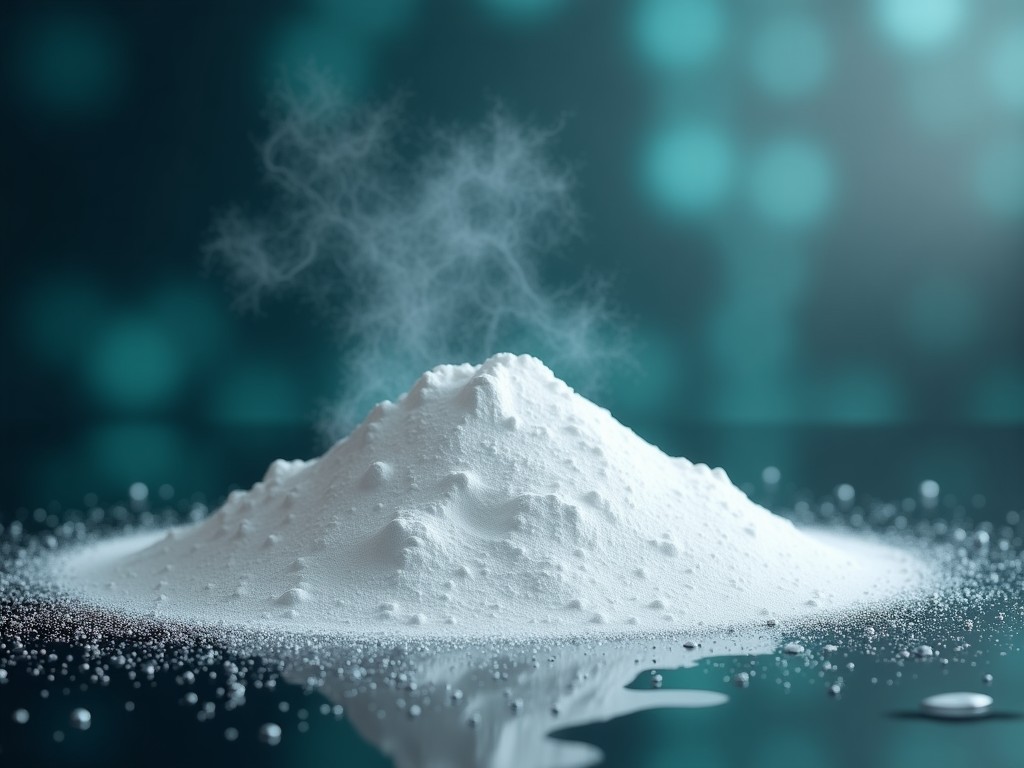
Use For Diatomaceous Earth
Diatomaceous Earth for Industrial Use
Diatomaceous earth is a naturally occurring siliceous sediment formed from the fossilized frustules of diatoms. Its primary component is amorphous silicon dioxide (SiO₂) with trace amounts of aluminum, iron, and alkali metal oxides. The intricate microporous structure of each frustule gives the material a high surface area and low bulk density, which are the basis for its performance in filtration, absorption, and filler applications.
Key Technical Characteristics
Uncalcined (natural) grades retain the original diatom shape and typically show a loss on ignition (LOI) below 2 % at 1000 °C, indicating minimal organic content. Flux‑calcined material is processed with soda ash at elevated temperature, which increases brightness and reduces clay impurities while preserving the silica framework.
Particle size is commonly expressed as d₅₀ and can be adjusted from roughly 5 µm to 30 µm through milling and classification. Loose bulk density falls between 0.20 g/cm³ and 0.40 g/cm³, while tapped density may reach up to 0.50 g/cm³. The pH of a 10 % aqueous slurry ranges from 7 to 9, reflecting a neutral to slightly alkaline surface.
All stated values are obtained using standard test methods such as ASTM C618 for chemical composition, ISO 12457 for particle size distribution, and gravimetric procedures for LOI and density.
| Property | Natural Grade | Flux‑Calcined Grade | Unit / Test Method |
|---|---|---|---|
| SiO₂ Content | ≥85 % | ≥90 % | wt % (XRF) |
| Loss on Ignition (1000 °C) | <2 % | <1 % | wt % (TG) |
| d₅₀ Particle Size | 5–30 µm | 5–30 µm | µm (Laser Diffraction) |
| Loose Bulk Density | 0.20–0.40 g/cm³ | 0.20–0.40 g/cm³ | g/cm³ (ASTM C110) |
| pH (10 % Slurry) | 7–9 | 7–9 | – (pH Meter) |
Primary Industrial Applications
The high porosity and inert silica surface allow diatomaceous earth to form permeable filter cakes that trap fine particulates without rapid blinding. Its absorbent capacity stems from the interconnected void structure, which can retain liquids many times its own weight. These characteristics make the material suitable for a range of processes where filtration, absorption, or functional filling is required.
- Beverage and liquid filtration: DE acts as a filter aid in beer, wine, juice, and vegetable oil clarification, providing a rigid matrix that captures yeast, haze, and suspended solids while maintaining flow rates.
- Water and wastewater treatment: The powder is used in precoat filters to remove fine solids, algae, and micro‑organisms before membrane or disinfection stages.
- Absorbent for spill control: Its low density and high porosity enable rapid uptake of oils, chemicals, and water‑based liquids, facilitating easy containment and disposal.
- Functional filler in paints, plastics, and rubber: DE contributes to viscosity control, sag resistance, and improved barrier properties without significantly increasing weight.
- Carrier for pesticides and fertilizers: The porous particles adsorb active ingredients, providing a dry, free‑flowing form for uniform field application.
- Thermal and acoustic insulation: When formed into boards or loose fills, the trapped air within the microstructure reduces heat transfer and sound transmission.
Material Forms and Packaging Options
Diatomaceous earth is supplied in several basic forms that differ by thermal treatment and surface chemistry. Natural (uncalcined) product retains the original frustule morphology and is chosen when maximum porosity and surface reactivity are desired. Flux‑calcined grades undergo soda‑ash treatment to increase whiteness and reduce abrasive silica content, making them suitable for food‑contact filtration. Calcined material, heated above 800 °C without flux, yields a harder, more abrasive product used in polishing and abrasive blasting.
Standard packaging includes multiwall paper bags (25 kg or 50 lb) with optional polyethylene liners for moisture protection, bulk bag (super sack) configurations of 500 kg to 1 t, and loose bulk transport via railcar or pneumatic trailer for high‑volume users. All containers are labeled with lot numbers, grade identification, and relevant safety information.
Quality Control and Testing
Each production lot undergoes a defined testing protocol to verify compliance with specification tables. Particle size distribution is measured by laser diffraction across the full range, with results reported as d₁₀, d₅₀, and d₉₀. Loss on ignition is determined by thermogravimetric analysis at 1000 °C under nitrogen atmosphere. Chemical composition, especially SiO₂ and trace metal oxides, is assessed by X‑ray fluorescence (XRF). Brightness and whiteness, where applicable, are measured using ISO brightness standards. Additionally, moisture content is monitored via loss on drying at 105 °C to ensure stable flow characteristics.
Inspection records are retained for traceability, and certificates of analysis are provided with each shipment, detailing the actual test values versus the permitted ranges.
Customization Options
Beyond standard grades, the material can be tailored to specific process requirements. Milling parameters can be adjusted to narrow or broaden the particle size distribution, influencing filtration rate and cake permeability. Surface modification with silanes or hydrophobic agents alters wettability for applications such as oil spill control or moisture‑sensitive formulations. Blending with other functional fillers (e.g., talc, calcium carbonate) enables fine‑tuning of mechanical properties in polymer compounds. Custom packaging, including branded bags or specialized liners, can be arranged upon request.
Engineering support is available to assist with selecting the optimal grade, conducting pilot‑scale trials, and interpreting test data for scale‑up.
Frequently Asked Questions
- Can the particle size distribution be customized? Yes, milling and classification allow adjustment of d₅₀ within the 5‑30 µm range, with tighter tolerances available upon request.
- What information is needed before a quotation? Required details include target application, desired grade (natural, flux‑calcined, calcined), approximate quantity, packaging preference, and any special specifications such as moisture content or brightness limits.
- Are food‑grade or pharmacopeial versions available? Flux‑calcined diatomaceous earth meeting FDA 21 CFR 184.1260 and EP/USP standards can be supplied; documentation and batch‑specific certificates are provided.
- How is quality verified for each lot? Each lot undergoes LOI, XRF, laser diffraction particle size, and pH testing; results are compiled into a certificate of analysis accompanying the shipment.
- What lead times should be expected for standard orders? Typical production lead time is 2‑3 weeks for stocked grades; custom sizes or treatments may extend to 4‑6 weeks depending on complexity.
Contact for Technical Inquiry
For further information on grades, testing data, or to discuss a specific application, please contact our technical sales team.