
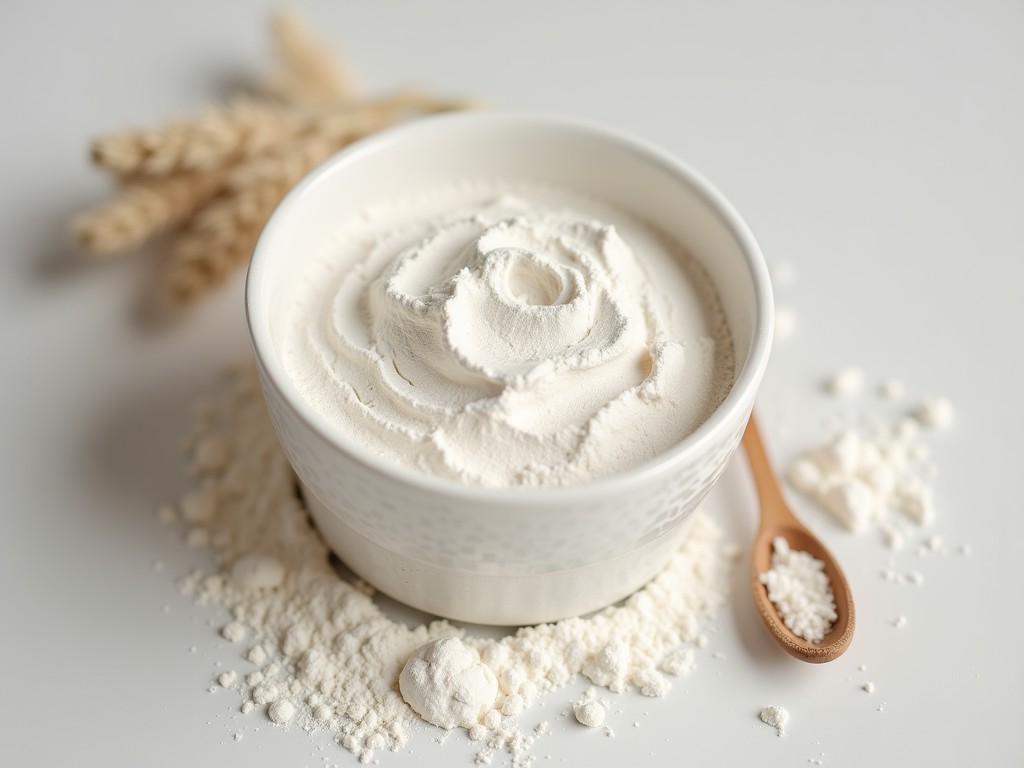
Benefits Of Kaolin Clay For Face
Benefits of Kaolin Clay for Face
Kaolin clay, chemically a hydrated aluminum silicate (Al₂Si₂O₅(OH)₄), is a naturally occurring soft white mineral derived from the weathering of feldspar-rich rocks. Its typical particle size distribution ranges from 2 to 20 µm (D50 ≈ 5 µm), giving it a smooth feel while retaining sufficient surface area for interaction with skin.
Typical Chemical and Physical Properties
| Property | Typical Value |
|---|---|
| SiO₂ content | 45‑55 wt% |
| Al₂O₃ content | 35‑40 wt% |
| Loss on ignition (LOI) | 12‑14 wt% |
| Specific surface area (BET) | 10‑15 m²/g |
| Bulk density (loose) | 0.4‑0.6 g/cm³ |
| pH (10 % slurry) | 4.5‑5.5 |
| Oil absorption capacity | 30‑45 g oil/100 g clay |
These values are representative; actual specifications can be adjusted according to project requirements and are available upon request.
Mechanisms of Action on Facial Skin
When dispersed in aqueous or anhydrous systems, kaolin particles adsorb excess sebum through physical entrapment and weak ionic interactions, reducing surface shine without stripping the stratum corneum. The mild abrasive action of the fine particles facilitates the loosening of desquamated cells, supporting a gentle exfoliation effect that improves skin texture.
Additionally, the clay’s alkaline buffering capacity helps maintain a skin‑surface pH close to the natural acidic mantle, which can inhibit the proliferation of certain acid‑tolerant microbes. The inert nature of the silicate matrix minimizes the risk of irritation or sensitization, making it suitable for reactive skin types.
Advantages for Formulators
Kaolin exhibits thixotropic behavior in suspensions, providing viscosity recovery after shear, which aids in the stability of emulsions and prevents settling of active ingredients. Its low abrasiveness (Mohs hardness ≈ 2‑3) allows incorporation into rinse‑off and leave‑on products without damaging application tools or packaging.
The material is compatible with a wide range of surfactants, polymers, and oils, showing minimal impact on foam stability or gel strength. Its white color contributes to product opacity, enabling consistent visual appearance in masks, powders, and creams without the need for additional pigments.
Typical Applications in Facial Skincare
- Facial masks: provides spreadability, drying time control, and oil‑absorbing function.
- Cleansers and scrubs: offers mild exfoliation and suspension of cleansing agents.
- Setting powders: absorbs moisture and sebum to prolong makeup wear.
- Soothing pastes: delivers a cooling sensation and barrier‑supportive feel.
Quality Control and Specification Verification
Incoming material is characterized by laser diffraction for particle‑size distribution, inductively coupled plasma (ICP) spectroscopy for elemental purity, and loss‑on‑ignition testing for moisture and volatile content. Batch‑to‑batch consistency is monitored through rheometry (yield stress and viscosity) and pH measurement of a 10 % aqueous dispersion.
All testing follows internationally recognized protocols (ISO, ASTM) and results are traceable to certified reference materials. Custom specification limits, such as maximum heavy‑metal content or specific surface area targets, can be established based on end‑use requirements.
Frequently Asked Questions
Can the particle size be tailored for specific product textures?
Yes, milling and classification processes allow adjustment of the D50 range (e.g., 2‑10 µm for silky feel or 10‑25 µm for enhanced scrubbing) according to project needs.
What information is required to obtain a quotation?
Typical details include desired quantity, packaging format (e.g., multi‑wall bags, drums), required purity level, and any special testing or certification requests.
Is kaolin clay available in different grades for cosmetic versus industrial use?
Grades differ primarily in microbial limits, heavy‑metal specifications, and particle‑size refinement; cosmetic grades meet stricter cosmetic‑ingredient regulations and are supplied with appropriate documentation.