

Benefits Of White Kaolin Clay
Benefits of White Kaolin Clay
Overview
White kaolin clay is a hydrous aluminum silicate mineral with the chemical formula Al₂Si₂O₅(OH)₄. It forms from the weathering of feldspar-rich rocks and is characterized by its low impurity content, fine particle size, and natural whiteness. These intrinsic attributes determine its suitability for high‑performance industrial applications where consistency and purity are critical.
Chemical Composition
Typical oxide analysis shows SiO₂ around 46 wt %, Al₂O₃ about 39 wt %, and bound water (OH) approximately 14 wt %. Trace elements such as Fe₂O₃, TiO₂, and alkali oxides are usually below 0.5 wt % each, contributing to low color bodies and minimal reactivity in downstream processes.
Loss on ignition (LOI) values generally range from 12 % to 14 %, reflecting the stoichiometric water content. The pH of aqueous suspensions typically falls between 5.0 and 7.0, indicating near‑neutral behavior that reduces corrosion risk in equipment.
Physical Properties
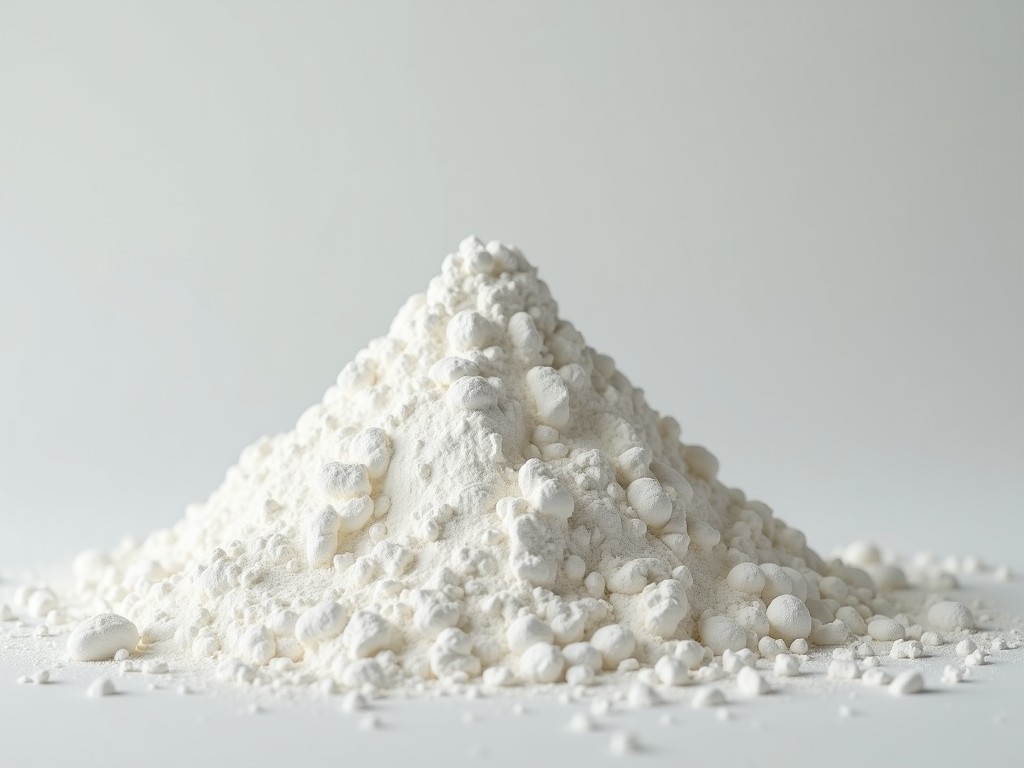
Particle size distribution is a key performance indicator. Commercial grades often exhibit a D₅₀ (median diameter) of 1.5 µm to 2.5 µm, with a D₉₇ below 10 µm. This fine grading ensures good dispersion in matrices and low abrasiveness on processing equipment.
Specific surface area, measured by BET nitrogen adsorption, commonly falls between 10 m²/g and 15 m²/g. Bulk density ranges from 0.4 g/cm³ to 0.6 g/cm³ depending on moisture content and compaction history.
Key Benefits for Industrial Use
High brightness and whiteness: ISO brightness values typically exceed 90 %, with some processed grades reaching 95 %. This property reduces the need for opacifying agents in coatings, papers, and plastics.
Low abrasiveness: Mohs hardness of 2–2.5 minimizes wear on mixers, extruders, and dies, extending tool life and lowering maintenance costs.
Chemical inertness: Resistance to acids and alkalis (except strong hydrofluoric acid) allows use in aggressive environments without degradation.
Controlled rheology: When dispersed, kaolin imparts shear‑thinning behavior that improves sag resistance in paints and extrusion stability in rubber compounds.
Thermal stability: Dehydroxylation begins around 550 °C, providing a stable filler up to typical processing temperatures of polymers and ceramics.
Typical Industrial Applications
In paper manufacturing, kaolin serves as a coating pigment and filler, enhancing printability, opacity, and ink hold‑out while reducing linting.
For architectural and industrial paints, it functions as an extender that improves scrub resistance, tint strength, and resistance to settling.
In polymers such as polypropylene and PVC, kaolin acts as a reinforcing filler that increases stiffness, dimensional stability, and barrier properties without significantly affecting impact strength.
Rubber compounds benefit from its reinforcing effect, leading to higher tensile strength and lower hysteresis loss, which translates to improved fuel efficiency in tire treads.
Ceramic bodies, including sanitary ware and tableware, utilize kaolin for its plasticity during forming and its contribution to fired whiteness and translucency.
Pharmaceutical and cosmetic formulations rely on its low heavy‑metal content and inert nature as a bulking agent, absorbent, and opacifier.
Quality Assurance Considerations
Suppliers typically provide a certificate of analysis that includes brightness (ISO), particle size distribution (laser diffraction), loss on ignition, residue on sieve (e.g., 45 µm), and trace metal content.
Process control focuses on minimizing variations in moisture content, which directly influences bulk density and flowability. Regular monitoring of pH and conductivity helps detect accidental contamination.
For applications requiring low abrasion, suppliers may conduct a Mohs scratch test or a rotary abrasion test to confirm compliance with specified limits.
Typical Properties Table
| Property | Typical Value | Test Method / Note |
|---|---|---|
| ISO Brightness | 90 % – 95 % | ISO 2470 |
| D₅₀ (Particle Size) | 1.8 µm – 2.2 µm | Laser Diffraction |
| Loss on Ignition (LOI) | 12 % – 14 % | Thermogravimetric Analysis (900 °C) |
| pH (10 % slurry) | 5.0 – 7.0 | Electrode Measurement |
| Specific Surface Area (BET) | 10 m²/g – 15 m²/g | N₂ Adsorption |
| Bulk Density (loose) | 0.40 g/cm³ – 0.55 g/cm³ | ASTM D1895 |
Frequently Asked Questions
Q: Can the particle size distribution be tailored for specific processes?
A: Yes. Grinding and classification equipment allow adjustment of D₅₀ and D₉₇ to meet requirements for coating, filler, or extrusion grades.
Q: What information is needed to obtain a quotation?
A: Desired brightness range, target particle size, moisture content limits, order quantity, and any required certifications (e.g., FDA, REACH).
Q: How is product consistency ensured between batches?
A: Suppliers use statistical process control on key parameters such as brightness, LOI, and sieve residue, with batch-to-batch variation typically under 1 % for brightness and 0.05 µm for D₅₀.
Q: What packaging options are available for industrial users?
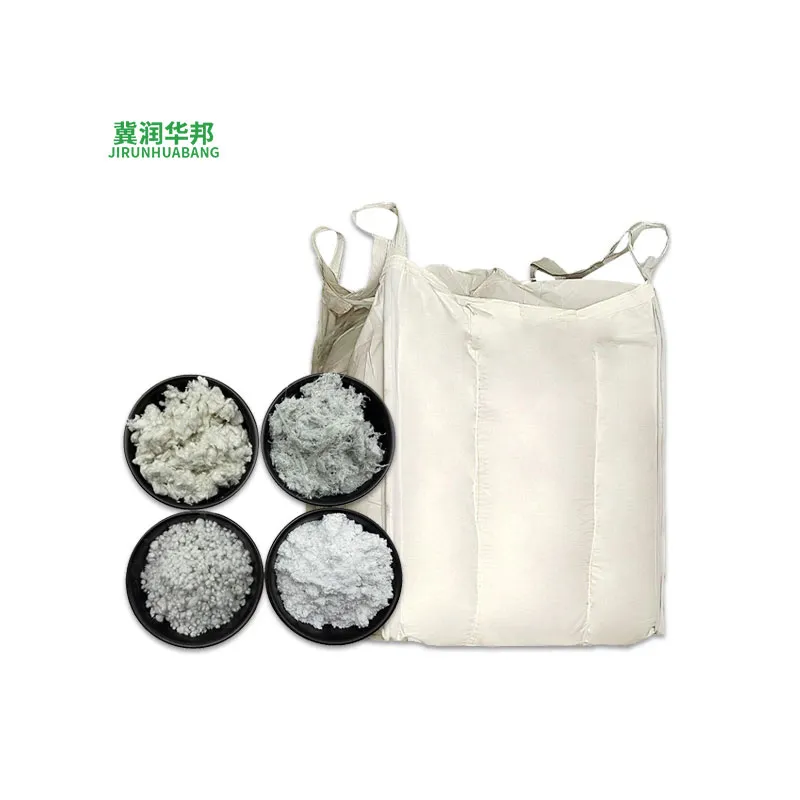
A: Multi‑wall paper bags (25 kg), bulk flexible intermediate bulk containers (FIBCs) up to 1 t, and pneumatic bulk trailers for direct silo feeding.