




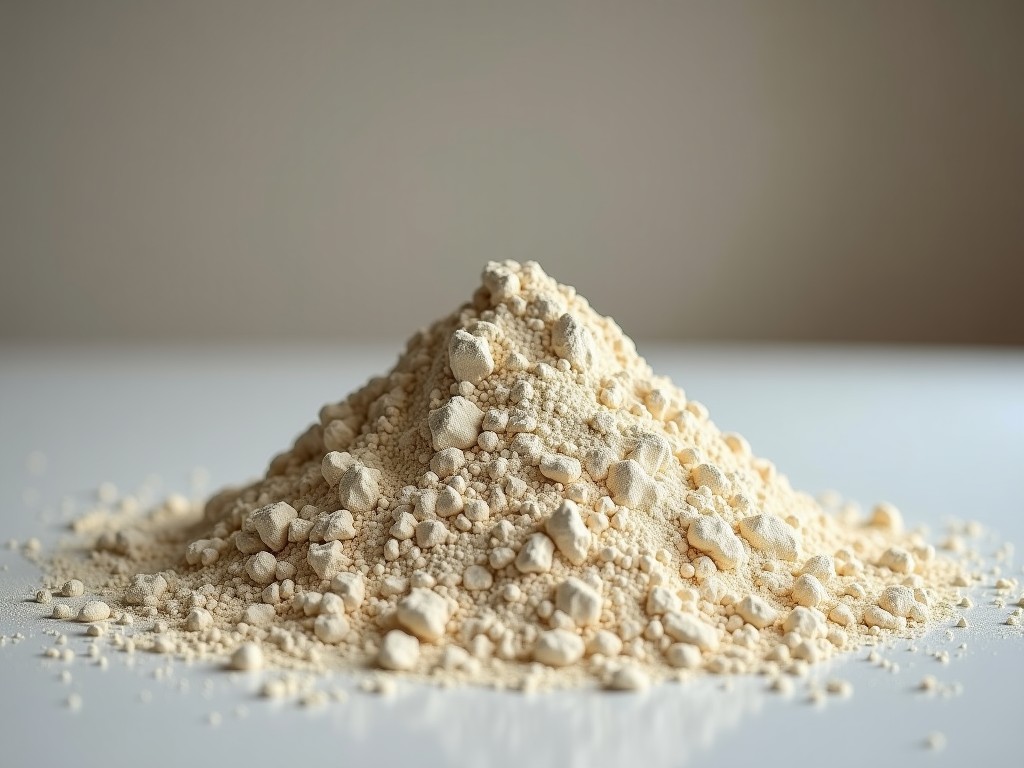
Buy Kaolin Clay Factory Exporter
Buy Kaolin Clay – Factory Exporter Overview
Kaolin clay, also referred to as china clay, is a naturally occurring hydrous aluminum silicate mineral dominated by the kaolinite crystal structure. Its formation results from the weathering of feldspar-rich rocks in tropical climates, yielding a product with low iron and titanium content that influences its whiteness and chemical stability.
Chemical Composition
The primary constituent is kaolinite with the ideal formula Al₂Si₂O₅(OH)₄, typically representing 90‑95 % of the dry mass in high‑grade material. Minor oxides such as Fe₂O₃, TiO₂, and K₂O may be present at levels below 0.5 % each, affecting properties like brightness and abrasiveness.
Impurities influence downstream processing; for example, elevated iron content can reduce reflectance in paper coating applications, while titanium oxides may increase opacity in pigment formulations. Understanding the exact oxide profile allows formulators to predict behavior in specific end‑uses.
Physical Properties
Key performance indicators for kaolin clay include particle size distribution, brightness (ISO brightness), loss on ignition (LOI), pH of a slurry, and specific surface area. These parameters are measured using standardized laser diffraction, spectrophotometry, gravimetric, and BET methods.
| Property | Typical Range | Test Method |
|---|---|---|
| Particle size (d50) | 1.5 – 4.5 µm | Laser diffraction (ISO 13320) |
| ISO Brightness | 80 – 95 % | ISO 2470 (reflectance) |
| Loss on Ignition (LOI) | 10 – 14 % | Gravimetric at 1000 °C |
| pH (10 % slurry) | 4.5 – 5.5 | Electrometric (ISO 4316) |
| Specific Surface Area (BET) | 5 – 15 m²/g | BET nitrogen adsorption |
Typical Applications
The selection of kaolin clay for a particular process depends on how its intrinsic properties interact with formulation requirements. Below are common sectors where the material provides functional benefits.
- Paper coating – high brightness and fine particle size improve gloss and ink hold‑out while reducing abrasion on press rollers.
- Ceramic bodies – low iron content minimizes firing defects, and the platy morphology contributes to green strength and controlled shrinkage.
- Paint and pigments – acts as an extender that enhances opacity, improves rheology, and reduces titanium dioxide demand without sacrificing hiding power.
- Rubber reinforcement – provides stiffness and abrasion resistance while maintaining low hysteresis in compounds for seals and gaskets.
- Plastics filler – improves dimensional stability and surface finish in polyolefins and engineering resins, especially when surface‑treated for compatibility.
- Catalyst support – high surface area and thermal stability allow dispersion of active metals for petrochemical refining processes.
Quality Control Philosophy
Consistent product performance begins with rigorous monitoring at each stage, from mine face to final bag. The approach combines inline process checks with laboratory verification to detect deviations early.
Sampling plans follow ISO 2859‑1 standards, collecting incremental samples per lot. Critical attributes such as particle size distribution, brightness, LOI, and chemical oxide content are measured using calibrated instruments. Results are compared against predefined specification limits; any out‑of‑tolerance trigger initiates root‑cause analysis and possible lot segregation.
Customization Options
While base kaolin clay offers a set of inherent characteristics, many applications benefit from tailored modifications. These adjustments are performed after mining and before final packaging to preserve material integrity.
- Calcination – controlled heating to 600‑900 °C removes hydroxyl groups, increasing brightness and abrasiveness for use in refractory and pigment grades.
- Surface treatment – silane or fatty acid coatings improve hydrophobicity and compatibility with polar polymers.
- Particle size classification – air‑jet or cyclone separators produce narrow fractions for high‑gloss paper or fine‑filler plastics.
- Bleaching – oxidative agents reduce residual iron oxides, pushing ISO brightness above 94 % for premium coating grades.
Packaging and Export Logistics
Protecting the product from moisture uptake and contamination during transit is essential to maintain its functional properties. Packaging choices are aligned with destination regulations and handling equipment.
- Multi‑wall paper bags with inner polyethylene liner – standard 25 kg units, providing barrier against humidity and easy palletization.
- Flexible intermediate bulk containers (FIBCs) – 500 kg to 1 tonne capacity, equipped with spout tops for controlled discharge.
- Bulk shipments in sealed container liners – suitable for high‑volume orders, reducing handling steps and minimizing exposure.
All export consignments comply with ISPM‑15 wood‑packaging regulations when pallets are used, and accompanying documentation includes material safety data sheets, certificate of analysis, and origin declarations.
Frequently Asked Questions
Can the particle size distribution be adjusted to meet specific formulation needs?
Yes. Air classification or hydrocyclone processes can produce narrow cuts ranging from sub‑micron to coarse fractions, with d50 values typically between 0.8 µm and 10 µm depending on the equipment settings.
What information is required to receive a quotation?
Key details include the desired grade (e.g., paper coating, calcined, surface‑treated), required particle size range, brightness target, order quantity, preferred packaging type, and destination port for freight calculation.
How is quality consistency verified across batches?
Each lot undergoes full characterization per the quality control table, and results are retained in a traceable database. Statistical process control charts monitor shifts in critical variables such as d50 and LOI.
What lead times can be expected for export orders?
Standard production cycles range from 10 to 18 working days after receipt of a confirmed purchase order, depending on the complexity of any requested customization and current plant load.
Ready to Discuss Your Requirements?
Provide the specifications outlined above, and our technical team will prepare a detailed quotation and lead‑time estimate.
Request a Quote