




Leading Chinese Kaolin Clay Company
Leading Chinese Kaolin Clay Company
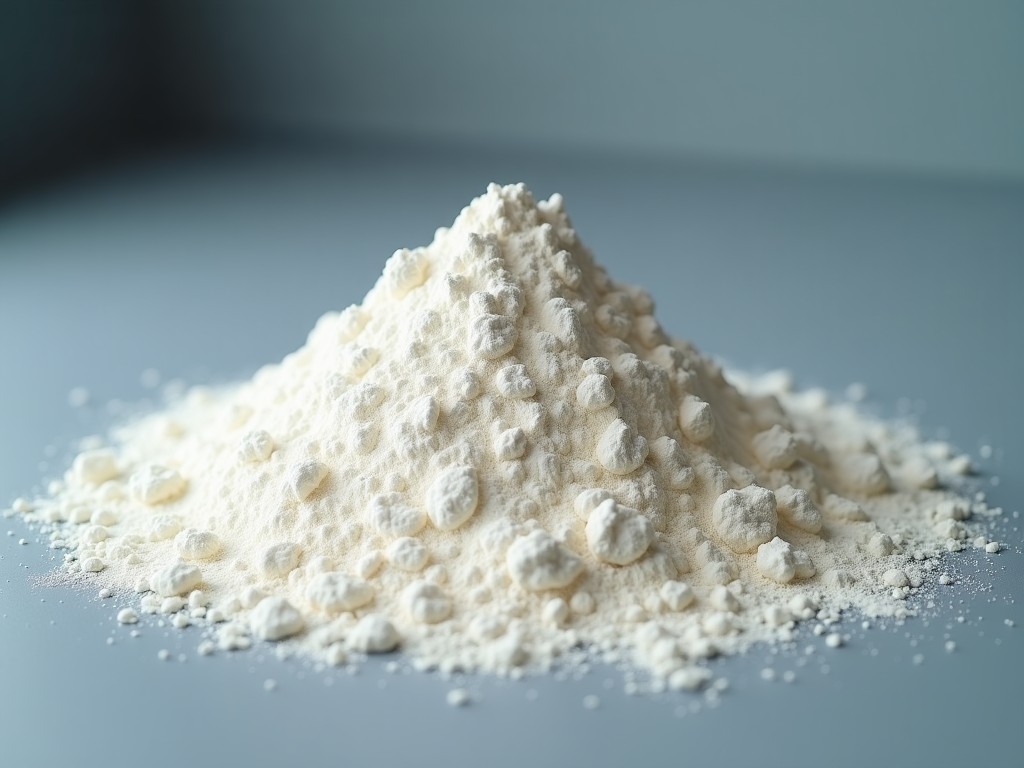
Kaolin clay, also known as china clay, is a soft white mineral composed primarily of the kaolinite group of aluminosilicates. Its low iron content gives it a high natural brightness, which is essential for applications where whiteness and opacity are critical performance factors.
The company sources raw kaolin from deposits in the Sichuan and Guangdong provinces, where the ore exhibits a typical kaolinite content of 85‑92 % after initial washing. This geological consistency allows the material to meet the tight specifications required by paper coating and ceramic glazing industries.
Particle size distribution is controlled through a series of hydrocyclone classifiers and high‑speed centrifuges, yielding a d50 typically between 1.8 µm and 2.5 µm depending on the target grade. Such fine grading ensures uniform dispersion in polymer matrices and reduces abrasion wear on downstream equipment.
Processing begins with open‑pit mining followed by wet‑scrubbing to remove sand and mica. The slurry then undergoes magnetic separation to extract ferrous contaminants, followed by bleaching with hydrogen peroxide to lift brightness to ISO 90 % or higher. Subsequent steps include filter pressing, spray drying, and jet milling to achieve the final powder form.
Quality assurance relies on inline laser diffraction for particle size, X‑ray diffraction for phase purity, and inductively coupled plasma optical emission spectroscopy (ICP‑OES) for trace element analysis. Each batch is accompanied by a certificate of analysis reporting brightness, pH, loss on ignition, and residual moisture.
In the paper industry, the clay serves as a coating pigment that improves print gloss and ink hold‑out while reducing binder demand. In ceramics, it acts as a flux agent that lowers vitrification temperature and enhances green strength. For paints and coatings, its platy morphology provides rheological control and sag resistance.
Rubber and plastic compounders value kaolin for its reinforcing effect and low abrasiveness, which extends mold life. The mineral’s chemical inertness ensures compatibility with a wide range of polymer systems, from PVC to EPDM.
| Property | Typical Value | Test Method |
|---|---|---|
| Brightness (ISO) | 88‑92 % | ISO 2470 |
| d50 (µm) | 1.8‑2.5 | Laser Diffraction |
| pH (10 % slurry) | 4.5‑5.5 | ISO 787‑9 |
| Loss on Ignition (1000 °C) | 12‑14 % | ISO 787‑2 |
| Residue on 45 µm sieve | <0.02 % | ISO 787‑10 |
Frequently Asked Questions
- Can the particle size distribution be customized? Yes, the milling circuit can be adjusted to produce finer or coarser grades based on end‑use requirements.
- What information is needed for a quotation? Required details include target brightness, d50, moisture content, order volume, and preferred packaging.
- Which packaging options are available? The product is supplied in 25 kg multi‑wall paper bags, 500 kg flexible intermediate bulk containers, or 1‑tonne bulk bags with optional palletization.
- How is product consistency verified? Each lot undergoes full statistical process control, with samples retained for six months for retrospective analysis.
- What is the typical lead time for export orders? Standard lead time ranges from 3 to 5 weeks after receipt of confirmed purchase order, depending on destination and customs clearance.
For technical data sheets, sample requests, or to discuss specific grade development, please use the inquiry link below.
Submit Inquiry