




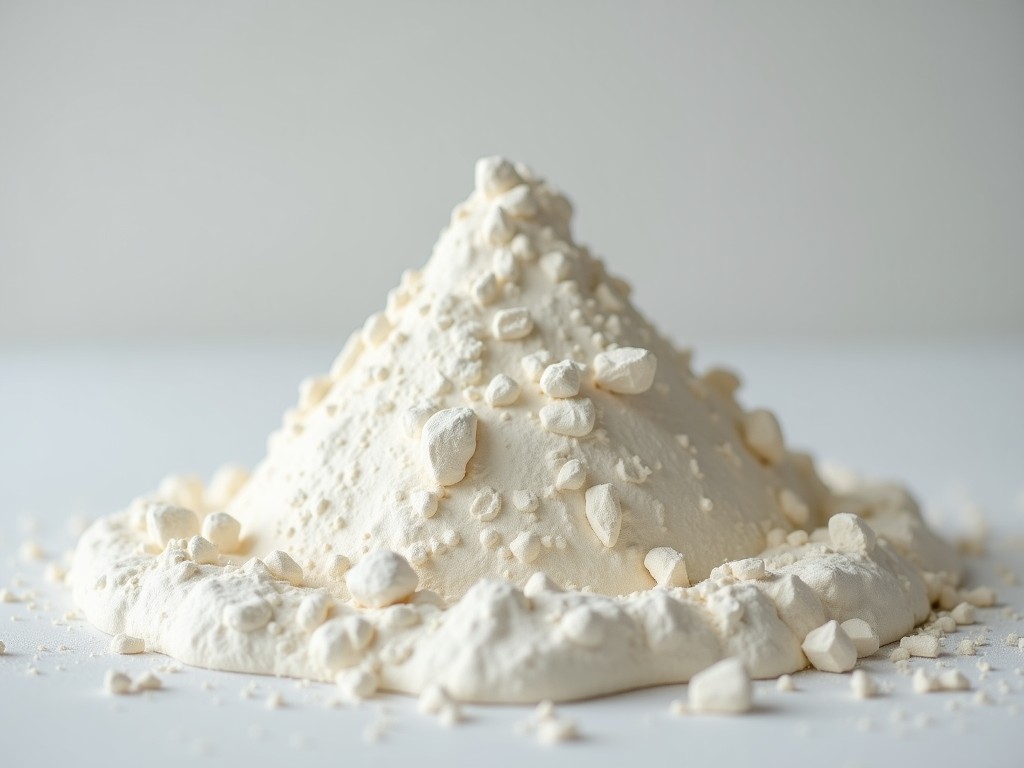
Oem Kaolin White Clay Benefits
OEM Kaolin White Clay: Benefits and Technical Overview
Kaolin, also known as china clay, is a naturally occurring hydrous aluminum silicate used across industries for its purity, whiteness, and functional properties. This page details the technical advantages of OEM‑grade kaolin white clay for manufacturers seeking consistent performance.
Chemical Composition
Typical OEM kaolin consists mainly of aluminum silicate hydroxide with the formula Al₂Si₂O₅(OH)₄. Trace oxides such as iron (Fe₂O₃) and titanium (TiO₂) determine the final brightness and color tone.
Iron content is usually kept below 0.5 % to achieve a high L* value, while titanium remains under 0.2 % to avoid yellowish undertones. These limits are adjustable based on customer specifications.
Physical Properties
Key parameters that influence processing and end‑use performance include particle size distribution, brightness, pH, and loss on ignition (LOI).
- D50 particle size: 1.5–3.0 µm (adjustable)
- Brightness (ISO‑B): 85–92 %
- pH (10 % slurry): 4.5–6.0
- Loss on ignition: 12–14 %
Functional Benefits
The combination of low abrasiveness, high whiteness, and controllable rheology makes OEM kaolin valuable in several manufacturing contexts.
Its platy particle morphology provides reinforcement without excessive wear on equipment, while the low iron content ensures consistent color in pigment‑sensitive applications.
When dispersed in water or polymer matrices, kaolin contributes to viscosity stabilization, improved opacity, and enhanced barrier properties.
Typical Industrial Applications
Selection of kaolin grade depends on the required balance of whiteness, abrasiveness, and interaction with other formulation components.
- Paper coating and filling – improves print gloss and reduces linting.
- Ceramic bodies and glazes – contributes to green strength and reduces firing shrinkage.
- Paints and coatings – acts as an extender pigment that enhances scrub resistance and film uniformity.
- Plastics and rubber – provides reinforcement, improves dimensional stability, and reduces cost.
- Adhesives and sealants – modulates rheology and improves adhesion to substrates.
Quality Control & Testing
Each batch undergoes a standardized test protocol to verify conformity with the agreed specification sheet.
- Brightness measured by ISO‑B reflectance.
- Particle size distribution via laser diffraction.
- Chemical analysis (ICP‑OES) for Fe, Ti, and other oxides.
- Loss on ignition (thermogravimetric analysis).
- Abrasion index (Taber test) for wear assessment.
Customization Options
OEM suppliers can tailor kaolin attributes to match specific process requirements without changing the base mineralogy.
- Calcination temperature to produce metakaolin for pozzolanic activity.
- Surface treatment with silanes or fatty acids for improved hydrophobicity.
- Classification to narrow particle size ranges (e.g., D50 <1 µm for high‑gloss coatings).
- Blending with other fillers (talc, calcium carbonate) to achieve targeted rheology.
Typical Values Table
| Property | Typical Range | Test Method |
|---|---|---|
| Brightness (ISO‑B) | 85–92 % | ISO 2470 |
| D50 Particle Size | 1.5–3.0 µm | Laser Diffraction |
| pH (10 % slurry) | 4.5–6.0 | ASTM D1293 |
| Loss on Ignition | 12–14 % | Thermogravimetric Analysis |
| Iron (Fe₂O₃) Content | ≤0.5 % | ICP‑OES |
| Titanium (TiO₂) Content | ≤0.2 % | ICP‑OES |
Frequently Asked Questions
Can the particle size be customized for specific coating viscosities?
Yes. Classification or milling can adjust D50 values from below 1 µm up to 5 µm, allowing formulators to tune rheology and opacity.
What information is needed to receive a quotation?
Required details include target brightness, particle size range, any surface treatment, order volume, and preferred packaging (e.g., 25 kg bags, bulk silos).
How is product consistency ensured between batches?
Statistical process control is applied to key parameters (brightness, Fe content, D50) with control limits defined in the specification sheet; each batch is accompanied by a certificate of analysis.
For technical consultation, sample requests, or to discuss a customized kaolin solution, please reach out to our engineering team.
Contact Us for a Quote