




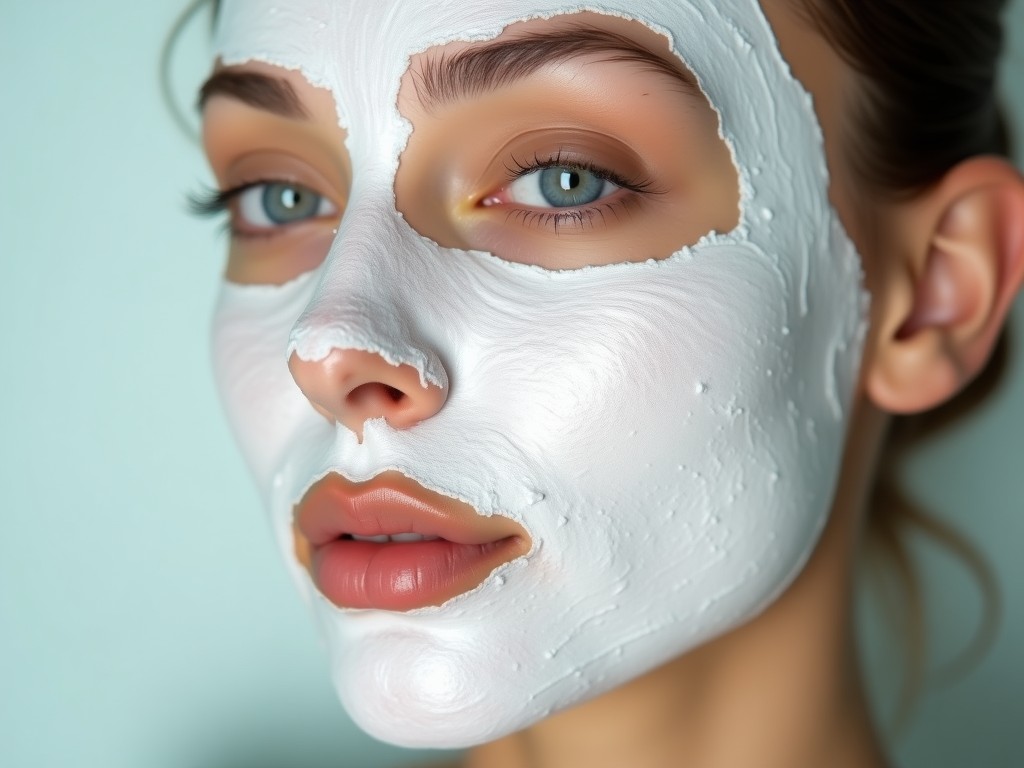
Use Of Kaolin Clay For Face
Use of Kaolin Clay for Face
Overview
Kaolin clay, also known as china clay, is a naturally occurring hydrous aluminum silicate mineral with the chemical formula Al₂Si₂O₅(OH)₄. It is mined, processed, and classified for use as a functional additive in personal care formulations. Its intrinsic properties—low abrasivity, high opacity, and controlled particle size—make it suitable for facial masks, cleansers, and powders.
Chemical Composition
Typical composition contains 20‑30 % alumina (Al₂O₃), 45‑55 % silica (SiO₂), and bound water accounting for ~12‑14 % of mass. Trace oxides of iron, titanium, and magnesium may be present, influencing hue from white to off‑yellow depending on deposit origin. Purity is expressed by loss on ignition (LOI) and can be adjusted through washing or calcination steps.
Particle Size Distribution
For facial use, the d₅₀ median diameter is commonly controlled between 2 µm and 8 µm, with a d₉₉ below 20 µm to avoid a gritty sensation. Laser diffraction yields a span ( (d₉₀‑d₁₀)/d₅₀ ) typically under 1.5, indicating a narrow distribution. Air‑classification or wet‑grinding can shift the curve toward finer fractions when higher translucency is required.
| Property | Typical Value | Test Method |
|---|---|---|
| d₅₀ (median) | 2‑8 µm | Laser diffraction |
| d₉₉ | <20 µm | Laser diffraction |
| Span | <1.5 | Calculated |
| Specific surface area (BET) | 5‑15 m²/g | BET adsorption |
| Loss on ignition (LOI) | 12‑14 % | Thermogravimetric analysis |
Surface Properties
Specific surface area (BET) ranges from 5 to 15 m²/g, providing adequate adsorption capacity for sebum and impurities while limiting excessive dryness. Cation exchange capacity (CEC) is low (<2 meq/100 g), indicating minimal interaction with loaded actives. At neutral pH the particle surface exhibits a slight negative charge, which helps stabilize oil‑in‑water emulsions.
Applications in Facial Care
Kaolin acts as a mattifying absorbent, viscosity modifier, and soft‑focus agent. In wash‑off masks it forms a spreadable paste that dries to a flexible film, facilitating impurity extraction without cracking. In pressed or loose powders it improves slip, reduces shine, and provides a silky feel. Its chemical inertness permits blending with actives such as niacinamide, zinc oxide, and botanical extracts.
- Facial masks – absorbent and film‑forming
- Cleansers – mild abrasive and stabilizer
- Powders – mattifying and texture enhancer
- Scrubs – carrier for exfoliating particles
Formulation Guidelines
Typical usage levels range from 5 % to 30 % w/w, adjusted according to target viscosity and absorbency. Compatibility with common emulsifiers (e.g., polysorbate‑80, cetyl alcohol, stearyl alcohol) shows no significant pH shift or phase separation. Stability testing at 40 °C/75 % RH for three months demonstrates no sedimentation when the clay is pre‑dispersed with a high‑shear mixer.
Preservative systems remain effective because kaolin does not consume active ingredients. Viscosity builders such as xanthan gum or carbopol may be used in conjunction to achieve desired rheology without over‑loading the solid phase.
Quality Assurance
Each lot is tested for loss on ignition, particle size distribution (laser diffraction), microbiological limits (total aerobic count <10³ CFU/g, yeast/mold <10² CFU/g), and heavy‑metal content (Pb <10 ppm, As <2 ppm) in accordance with ISO 22716 and USP <61>/<62>. A certificate of analysis accompanies every shipment, and batch‑specific data are available upon request.
Customization Options
Particle size can be tailored via micronization or air‑classification to meet specific sensory or optical requirements. Surface treatment with silanes or quaternary ammonium compounds is feasible to modify hydrophobicity or improve compatibility with oil‑based phases. Color adjustment through selective bleaching or controlled calcination yields shades ranging from pure white to warm beige.
- Median diameter: 1‑15 µm (adjustable)
- LOI: 8‑18 % (via calcination)
- Surface hydrophobicity: contact angle 30‑80° (treatment dependent)
Frequently Asked Questions
Can the particle size be customized for a specific formulation?
Yes. Jet‑milling or air‑classification can achieve d₅₀ values from 1 µm to 15 µm, with corresponding changes in spreadability and opacity.
What information is required before a quotation?
Desired usage level, target particle‑size range, any surface‑treatment needs, and required packaging (e.g., 25 kg bags, bulk totes) help us provide an accurate quote and lead time.
How is quality inspected?
Each batch undergoes LOI, laser diffraction, microbial testing, and heavy‑metal analysis. Results are documented in the CoA and retained for traceability.
Get in Touch
For technical data sheets, sample requests, or to discuss a custom grade for your facial‑care line, please contact our application engineering team.
Request Information