




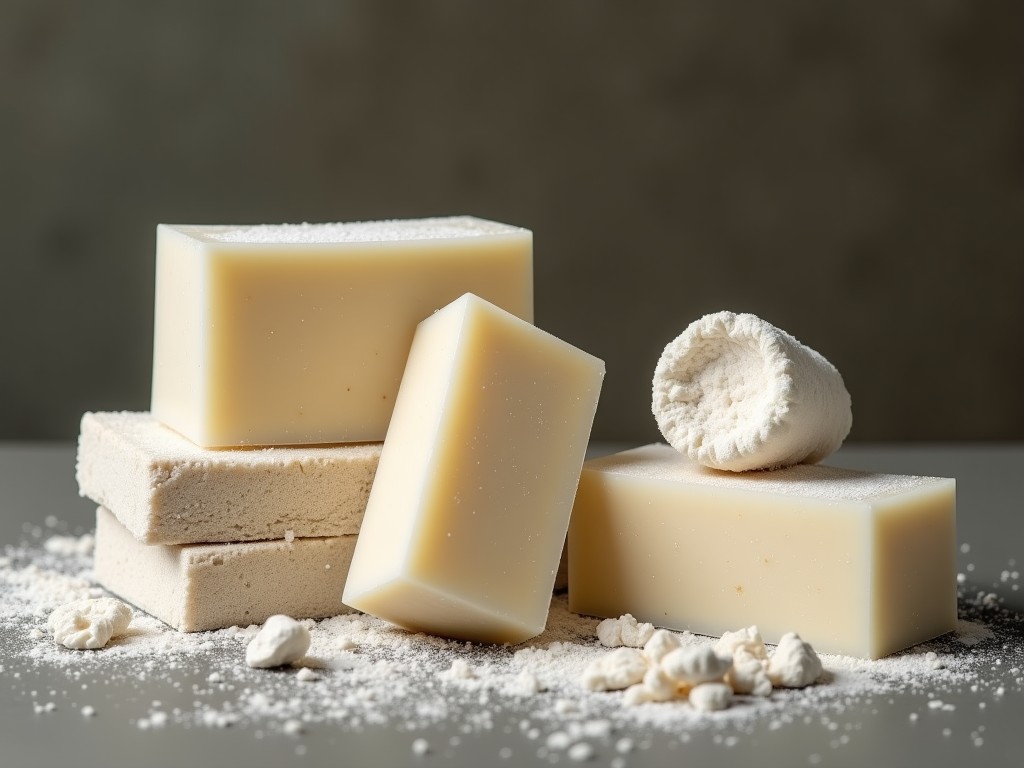
Uses Of Kaolin In Soap Making
Kaolin for Soap Making: Technical Overview
Chemical Composition and Physical Characteristics
Kaolin, chemically known as aluminum silicate hydroxide (Al₂Si₂O₅(OH)₄), occurs as a platy mineral with a typical particle size distribution ranging from 0.5 to 5 µm when milled for cosmetic use.
Its specific surface area usually falls between 10 and 20 m²/g, providing sufficient reactivity for adsorption without excessive abrasiveness.
The loss on ignition (LOI) is typically 12‑14 %, reflecting the bound hydroxyl groups that contribute to its mild alkalinity in aqueous systems.
| Parameter | Typical Range |
|---|---|
| SiO₂ content | 45‑50 % |
| Al₂O₃ content | 35‑38 % |
| Loss on ignition (LOI) | 12‑14 % |
| pH (10 % slurry) | 4.5‑5.5 |
| Median particle size (D50) | 2‑3 µm |
Functional Role in Soap Formulation
In cold‑process and hot‑process soap making, kaolin acts as a functional filler that modifies rheology and contributes to the sensory profile of the final bar.
Its platy particles disperse uniformly in the saponified matrix, increasing viscosity at low shear while allowing smooth extrusion during molding.
The mild alkalinity of kaolin helps balance the pH of fresh soap, reducing the likelihood of excess free alkali that can cause skin irritation.
Because kaolin is chemically inert toward fatty acids and sodium hydroxide, it does not interfere with the saponification reaction, preserving the intended fatty acid profile.
Key Benefits for Soap Manufacturers
- Improves bar hardness without increasing brittleness, allowing higher oil fractions in the formula.
- Provides a smooth, silky feel that enhances consumer perception of luxury.
- Acts as a mild absorbent, helping to stabilize fragrance oils and reduce sweating in humid conditions.
- Reduces production cost by substituting a portion of more expensive oils or butter additives.
- Compatible with both sodium hydroxide (NaOH) and potassium hydroxide (KOH) based systems.
Quality Control and Consistency
Each batch is screened for particle size distribution using laser diffraction, with D90 kept below 10 µm to ensure smoothness.
Chemical purity is verified by X‑ray fluorescence (XRF) to confirm SiO₂/Al₂O₃ ratios within the specified limits.
Loss on ignition and pH are measured according to ASTM C110 and ASTM D1293, respectively, providing traceable data for every lot.
Suppliers provide a certificate of analysis (CoA) that includes these parameters, enabling formulators to adjust water and alkali levels with confidence.
Handling, Storage, and Shelf Life
Kaolin is hygroscopic to a modest degree; it should be stored in sealed, moisture‑barrier bags at temperatures below 30 °C to prevent clumping.
Under these conditions, the material retains its functional properties for at least 24 months from the date of manufacture.
Before use, it is recommended to pass the powder through a 200 mesh sieve to break any agglomerates that may have formed during transit.
Frequently Asked Questions
Can the particle size be customized for specific soap textures? Yes, milling can be adjusted to produce finer grades (D50 < 1 µm) for translucent bars or coarser grades (D50 ≈ 5 µm) for exfoliating effects.
What information is required to obtain a quotation? Provide the desired quantity, target particle size range, and any required certification (e.g., ISO 9001, cosmetic grade).
How is quality inspected before shipment? Each lot undergoes random sampling for particle size, chemical composition, LOI, and pH, with results documented in the CoA.
Technical Inquiry
To discuss how kaolin can be integrated into your soap formulation, share your batch size, target properties, and any regulatory constraints.
Our technical team will respond with a tailored recommendation and a sample request procedure.
Request Technical Consultation