




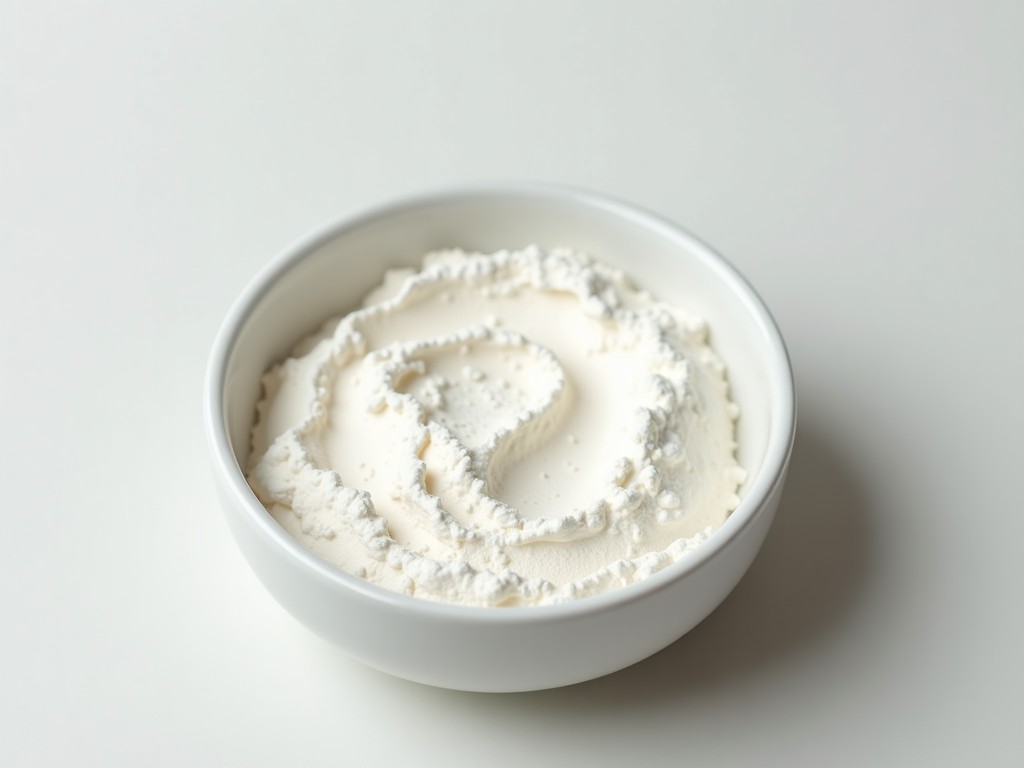
White Kaolin Clay Benefits For Skin
White Kaolin Clay: Technical Overview for Skin Care Applications
Kaolin, chemically known as hydrous aluminum silicate (Al₂Si₂O₅(OH)₄), occurs naturally as a soft, white mineral derived from the weathering of feldspar-rich rocks. In its purified form it consists predominantly of silica and alumina with a controlled loss on ignition, making it suitable for direct contact with skin in cosmetic formulations.
Chemical Composition and Purity
Typical analytical grades show approximately 46 % SiO₂, 39 % Al₂O₃, and 14 % loss on ignition (LOI) when heated to 1000 °C. Trace element levels (Fe, Ti, Mn) are generally below 0.1 % each, and heavy metal content complies with cosmetic regulatory limits (e.g., Pb < 10 ppm, As < 2 ppm). Purity is adjusted through washing, classification, and, when required, calcination to remove volatile constituents.
Particle Size Distribution and Morphology
The platelet morphology of kaolin imparts a specific surface area ranging from 10 to 25 m²/g depending on grade. Laser diffraction measurements commonly reveal a D₅₀ between 2 µm and 5 µm, with D₉₀ below 20 µm. This fine, uniform distribution contributes to a smooth sensory profile and prevents perceptible grittiness in topical applications.
Surface Chemistry and pH
The point of zero charge (PZC) of raw kaolin lies near pH 4.5, resulting in a slightly acidic surface when dispersed in water. Aqueous suspensions typically measure pH 4.0–5.5, which aligns with the skin’s natural acid mantle and supports barrier compatibility. Surface hydroxyl groups enable weak hydrogen bonding with polar skin components, facilitating mild adsorption without disruptive irritation.
Mechanistic Benefits for Skin
Kaolin’s primary functional mechanisms include:
- Adsorption of excess sebum and particulate impurities, quantified by oil absorption capacities of 30–40 g per 100 g of clay.
- Mild physical exfoliation due to platelet edges, providing controlled desquamation without macro‑abrasion.
- Rheological modification; suspensions exhibit shear‑thinning behavior that improves spreadability and stabilizes emulsions.
- Barrier support through transient occlusion that reduces transepidermal water loss (TEWL) in occlusive mask formats.
Industrial Processing Considerations for Cosmetic Grade
Production of cosmetic‑grade kaolin involves multiple stages: crude mining, slurry formation, high‑intensity washing to remove soluble salts, hydraulic classification to achieve target particle size, optional thermal treatment (calcination at 600–800 °C) to enhance whiteness and reduce LOI, and final sieving under ISO 14644‑1 clean‑room conditions to control microbial load. Each step is monitored to maintain consistent chemical and physical specifications.
Quality Control and Testing Methods
Standard test protocols include:
- Chemical analysis via X‑ray fluorescence (XRF) for SiO₂, Al₂O₃, LOI.
- Particle size distribution by laser diffraction (ISO 13320).
- pH measurement of 10 % w/w slurry (ISO 4316).
- Microbial enumeration (total aerobic count, yeast/mold) per ISO 16212.
- Heavy metal screening using ICP‑MS (limits per CosIng).
Typical Specification Ranges for Cosmetic Grade White Kaolin Clay
| Parameter | Typical Range | Test Method |
|---|---|---|
| SiO₂ (%) | 44 – 48 | XRF |
| Al₂O₃ (%) | 37 – 41 | XRF |
| Loss on Ignition (%) | 12 – 16 | Gravimetric (1000 °C) |
| D₅₀ (µm) | 2.0 – 5.0 | Laser diffraction |
| pH (10 % slurry) | 4.0 – 5.5 | ISO 4316 |
| Oil absorption (g/100g) | 30 – 40 | ASTM D281 |
| Total aerobic count (CFU/g) | < 10³ | ISO 16212 |
Applications in Skin Care Formulations
White kaolin functions as a multifunctional additive in various topical systems:
- Facial masks and poultices where its adsorption capacity draws out surface oils and impurities.
- Powder‑based products (e.g., setting powders, dry shampoos) providing matte finish and sebum control.
- Cleansers and scrubs acting as a mild abrasive and rheology modifier to improve texture and suspension of beads.
- Emulsions and creams where it stabilizes the internal phase and contributes to a silky skin feel.
Customization Options
Suppliers can tailor kaolin to specific formulation needs by adjusting:
- Calcination level to modify brightness, LOI, and surface reactivity.
- Particle size classification (e.g., ultra‑fine < 2 µm for silky feel, or coarser fractions for gentle exfoliation).
- Surface treatment with silanes or polymers to alter hydrophobicity or improve dispersion in silicone‑based systems.
- Packaging formats ranging from multi‑wall paper bags (25 kg) to aseptic bulk containers for liquid slurries.
Frequently Asked Questions
- Can the particle size be customized for a specific application? Yes, classification equipment allows selection of D₅₀ values ranging from sub‑micron to > 10 µm based on end‑use requirements.
- What information is needed before a quotation can be issued? Required details include target chemical purity limits, desired particle size distribution, any surface treatment preferences, order quantity, and packaging specifications.
- How is microbial quality assured for cosmetic grades? The product undergoes washing, filtration, and final packaging under controlled environments; each batch is tested for total aerobic count and yeast/mold per ISO 16212.
- Are there regulatory documents available for cosmetic use? Suppliers provide Material Safety Data Sheets (MSDS), CosIng compliance statements, and, upon request, Certificate of Analysis (CoA) referencing the relevant pharmacopeial or cosmetic standards.
Contact for Technical Inquiry
To request a sample, discuss specification adjustments, or obtain detailed technical data sheets, please reach out to our technical team via the contact form at /contactus. We will respond with the requested documentation and lead‑time information within one business day.