
Bentonite Clay Industrial Performance Analysis
Selecting the right adsorbent or sealing material often comes down to the specific mineralogy of the clay used, where the unique swelling capacity of montmorillonite makes a decisive difference. In industrial processing, the ability to manipulate fluid permeability and chemical purity is not just a preference but a critical operational requirement.
From petrochemical refining to wastewater management, the demand for high-purity mineral inputs has shifted toward materials that offer consistent chemical stability and predictable physical behavior under pressure. This shift is driven by stricter environmental regulations and the need for higher efficiency in gas-liquid separation systems.
Understanding the technical nuances of bentonite clay allows engineers to optimize their processes for both cost and performance. This analysis examines the material's functional role across diverse industrial applications and the criteria for selecting professional-grade mineral products.
Mineralogical Foundations of Swelling Clays
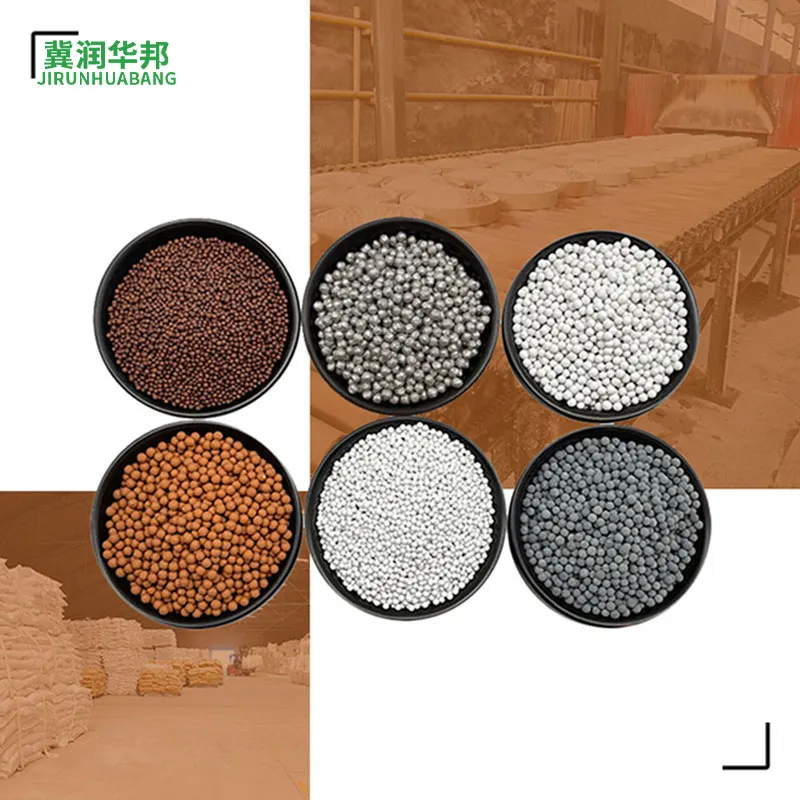
The functional utility of these minerals is rooted in their smectite group structure, characterized by a 2:1 layer arrangement of silica tetrahedra and aluminum octahedra. This specific atomic configuration allows water molecules and ions to enter the interlayer spaces, causing the material to expand significantly.
Unlike standard clays, the high swelling capacity ensures a tight seal in geotechnical applications and a high adsorption surface in chemical processing. Hebei Runhuabang New Material Technology Co., Ltd. leverages this mineralogical stability to produce consistent batches of non-metal mineral products that meet rigorous industrial standards.
Cation Exchange and Surface Chemistry
The effectiveness of a mineral adsorbent is primarily determined by its Cation Exchange Capacity (CEC). This is the measure of how many exchangeable cations can be held by the clay surfaces, which directly influences its ability to remove contaminants from liquid streams or stabilize drilling muds.
When sodium ions dominate the interlayer space, the clay exhibits maximum swelling and viscosity, which is essential for creating impermeable barriers. Conversely, calcium-based clays offer more controlled swelling, often requiring chemical activation to reach the same performance levels as sodium-rich varieties.
In high-precision environments, such as the production of cosmetic or food-grade additives, the purity of these ions is paramount. Contaminants in the mineral matrix can lead to unwanted reactions, making the sourcing of refined minerals from ISO9001 certified producers a necessity for quality assurance.
Impact of Activation on Material Performance
Raw minerals are often insufficient for advanced industrial requirements. Chemical activation, typically through the introduction of sodium carbonate, transforms calcium-bentonite into sodium-bentonite, dramatically increasing its swelling pressure and viscosity.
The transition from a calcium-dominant to a sodium-dominant interlayer structure increases the hydration energy, enabling the clay to form a cohesive, low-permeability gel that is critical for environmental containment and fluid loss control.
This process of modification allows for the tailoring of materials to specific needs. For example, modifying the clay surface with organic cations can create organophilic clays, which are capable of absorbing oils and organic solvents, expanding the utility of the mineral beyond aqueous systems.
Comparative Efficiency in Fluid Management
When comparing different mineral fillers and adsorbents, performance is measured by their ability to maintain stability under varied pH levels and temperatures. While materials like Zeolite or Kaolin have their place, the specific viscosity-to-concentration ratio of sodium-activated clays remains unmatched for sealing.
Evaluation focuses on the balance between initial permeability and long-term stability. In a typical industrial setting, the goal is to achieve a rapid seal without causing excessive pressure buildup that could damage the surrounding infrastructure.
Figure 2. Relative Performance Index of Industrial Mineral Clays
Critical Deployment Scenarios
In petrochemical refining and desulfurization units, the use of porous mineral structures is essential for optimizing mass transfer rates. The inert chemical nature of these minerals ensures that the purity of the final product is not compromised by the catalyst or support medium.
Furthermore, in wastewater treatment plants, these materials serve as a primary barrier to prevent the leaching of hazardous pollutants into the groundwater. The combination of lightweight design and robust structural integrity makes them a cost-effective alternative to synthetic polymers.
Evolution of Sustainable Mineral Sourcing
The industry is moving toward a "circular mineral economy," where the focus is on reducing the energy intensity of the refining process. Traditional calcination methods are being replaced by more precise chemical modifications that require lower temperatures and fewer additives.
As industries demand higher performance, the integration of mixed-mineral systems is becoming common. Combining different grades of clay with materials like diatomaceous earth or wollastonite can create composite materials with tailored porosity and strength.
The shift toward sustainability also involves rigorous testing for consistency. Hebei Runhuabang utilizes advanced analytical instruments to ensure that each batch of mineral powder maintains the same chemical signature, reducing waste and improving the predictability of the final application.
Selection Framework for Industrial Procurement
Procuring the correct grade of bentonite clay requires a balance of physical specifications and chemical purity. Buyers must distinguish between cosmetic grade, industrial grade, and food grade, as the tolerance for heavy metals and impurities varies significantly across these categories.
Technical considerations should include the particle size distribution and the moisture content. Overly coarse materials may fail to form a complete seal, while excessive moisture can lead to clumping during the mixing phase, affecting the homogeneity of the final product.
Ultimately, the decision should be based on a relative suitability matrix that weighs the cost of the material against the risk of failure in the specific operational environment.
| Evaluation Factor | Sodium Bentonite | Calcium Bentonite | Kaolin Clay | Zeolite Powder |
|---|---|---|---|---|
| Swelling Capacity | Very High | Moderate | Low | Low |
| Adsorption Rate | High | Moderate | Low | Very High |
| Chemical Inertness | Moderate | High | Very High | High |
| Fluid Viscosity | High | Low | Very Low | Low |
| Typical Use Case | Sealing/Drilling | Binding/Filler | Ceramics/Paper | Water Filtration |
| Relative Cost | Medium | Low | Low | Medium |
Questions & Answers
The primary difference lies in the cation occupying the interlayer space. Sodium bentonite exhibits a much higher swelling capacity and creates a more viscous gel when mixed with water, making it ideal for sealing and drilling. Calcium bentonite has lower swelling properties and is more commonly used as a binder or in applications where controlled expansion is required.
Particle size distribution determines the surface area available for adsorption and the speed at which the material hydrates. Finer particles typically provide a faster seal and higher reactivity but may be more prone to dusting and aggregation. Industrial grades are usually calibrated to a specific micron range to ensure uniform fluid distribution in gas-liquid systems.
Yes, provided it is processed to a food or cosmetic grade. This requires stringent purification processes to remove heavy metals and other impurities. These refined grades are used as thickening agents, stabilizers, or clarifying agents in the food and beauty industries, where safety and purity are the highest priority.
CEC is a measure of the clay's ability to hold and exchange positively charged ions. A higher CEC indicates a greater capacity for the mineral to adsorb contaminants, such as heavy metals or organic pollutants, from a liquid medium. This makes CEC a critical metric for engineers designing water treatment or soil remediation systems.
Quality is verified through a combination of X-ray diffraction (XRD) for mineralogical composition, laser diffraction for particle size analysis, and titration for CEC. Following ISO9001 standards ensures that the testing process is consistent and that the delivered product matches the technical data sheet provided by the manufacturer.
In environments with high salinity, the excess of salts can inhibit the swelling of sodium bentonite by compressing the electrical double layer around the clay particles. This reduces the viscosity and the sealing efficiency. To counter this, specialized salt-resistant grades or organic modifications are used to maintain performance in brine-rich conditions.
Final Thoughts
The selection of industrial minerals is a complex balance of mineralogy, chemical activation, and application-specific requirements. Whether the goal is to create an impermeable barrier or to optimize mass transfer in a refinery, the physical and chemical consistency of the material is the single most important factor in operational success.
As the industry evolves toward more sustainable and high-performance solutions, the role of refined, high-purity minerals becomes even more critical. Partnering with manufacturers who prioritize analytical rigor and quality management ensures that industrial processes remain efficient, reliable, and compliant with global standards.