
tourmaline stone Technical Performance Analysis
The industrial utilization of pyroelectric minerals has shifted from simple curiosity to precise application in modern materials science. Among these, tourmaline stands out due to its unique ability to maintain an electrical charge when subjected to temperature changes, a property that makes it indispensable in diverse technical environments.
In the context of non-metallic mineral manufacturing, the integration of such specialized stones requires a deep understanding of crystal structure and purity. As industries move toward more sustainable and energy-efficient filtration and heating systems, the demand for processed minerals with specific electromagnetic properties has surged.
Navigating the selection of high-grade tourmaline stone involves balancing mineral purity with particle size and stability. This article examines the technical logic behind its application and how to evaluate quality in an industrial supply chain.
The Mineral Foundation of Tourmaline
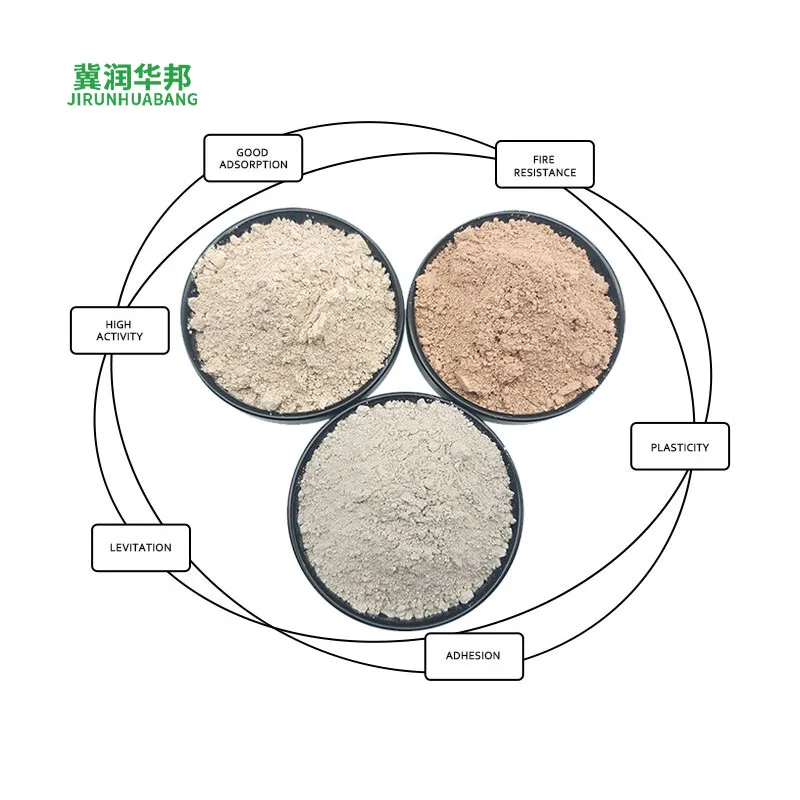
Tourmaline is a complex boron silicate mineral that exists in a variety of colors and forms. In the industrial sector, its value is derived not from aesthetic appeal but from its inherent polarization. Unlike most minerals, tourmaline possesses a permanent dipole moment, allowing it to interact with electrostatic fields in unique ways.
Hebei Runhuabang New Material Technology Co., Ltd. leverages this mineral's properties within a broader portfolio of non-metallic minerals, ensuring that the extraction and processing stages preserve the crystal's natural polarity, which is essential for downstream chemical and physical applications.
Technical Mechanics of Pyroelectricity
The defining technical characteristic of tourmaline is its pyroelectric effect: the ability to generate an electrical potential when the temperature of the crystal changes. This occurs because the ions within the crystal lattice shift slightly during thermal expansion or contraction, altering the internal electric field.
This phenomenon allows tourmaline to act as a natural ionizer. When integrated into materials, it can facilitate the release of negative ions, which is highly valued in water treatment systems, air purification filters, and specialized ceramic components where electrostatic attraction is used to capture particulates.
From a manufacturing standpoint, maintaining the consistency of this effect requires strict control over the mineral's purity and the method of grinding. Over-processing or contamination with other silicates can neutralize the dipole moment, rendering the material ineffective for technical use.
Evaluating Industrial Purity Standards
For industrial buyers, the "grade" of a mineral is often more critical than the raw material name. In the case of tourmaline, purity is measured by the absence of interfering metal oxides and the uniformity of the crystal structure across the batch.
The effectiveness of a pyroelectric mineral is directly proportional to its crystalline integrity; any structural dislocation during the crushing process significantly diminishes its electrical response.
High-purity processing involves multiple stages of magnetic separation and flotation to remove impurities. This ensures that when tourmaline is used as a filler or an active agent in chemical technology, it does not introduce unwanted reactive elements into the final product formulation.
Comparative Performance Metrics
When comparing tourmaline to other non-metallic minerals like Zeolite or Bentonite, the evaluation criteria shift from absorption capacity to electrical activity. While Zeolite is prized for ion exchange, tourmaline is selected for its active polarization capabilities.
The following index illustrates the relative suitability of various minerals based on key technical requirements. These values represent a qualitative assessment of material properties rather than a fixed statistical measurement.
Figure 2. Mineral Application Suitability Index
Integration in Modern Manufacturing
In practical industrial settings, tourmaline is rarely used in isolation. It is frequently combined with other minerals like Mica or Diatomaceous Earth to create composite materials. For instance, in the production of specialized filtration media, tourmaline provides the electrostatic charge needed to attract fine pollutants, while the supporting mineral structure ensures mechanical strength and flow rate.
Manufacturers evaluating these materials must consider the thermal stability of the final composite. Since the pyroelectric effect is temperature-dependent, the operational range of the equipment determines the required concentration of the mineral. A typical manufacturer will test multiple ratios of tourmaline to binder to optimize the electrical output against the structural requirements of the part.
Emerging Trends in Mineral Synthesis
The industry is currently moving toward "engineered minerals," where raw tourmaline is processed into ultrafine powders to increase the surface area available for ionic interaction. This evolution is mirrored in other products, such as ultrafine kaolin used in electrophoresis paints, where particle size reduction directly improves dispersibility and coverage.
Another significant trend is the shift toward sustainable extraction. The non-metallic mineral sector is increasingly adopting closed-loop water systems and low-energy grinding techniques to reduce the environmental footprint of refining complex silicates.
Future challenges lie in the stabilization of the electric charge in highly humid environments. Research is focusing on hydrophobic coatings that can protect the mineral core without insulating it from the target medium, potentially expanding the use of tourmaline in outdoor industrial sensors.
Selection Framework for Procurement
Procuring industrial minerals requires a rigorous verification process. Relying on a product name is insufficient; buyers must request a technical data sheet that specifies the mineral's purity, particle size distribution, and chemical composition.
The trade-off in mineral selection usually exists between the cost of refinement and the performance requirement. High-purity crystals are necessary for electronic sensors, whereas coarse-ground tourmaline is sufficient for large-scale water filtration beds.
The following framework provides a comparative view of how to select a mineral based on the specific operational goals of a project.
| Requirement | Ideal Mineral | Key Metric | Selection Priority |
|---|---|---|---|
| Electrostatic Charge | Tourmaline | Dipole Moment | High |
| Ion Exchange | Zeolite | Cation Capacity | Medium |
| Fluid Binding | Bentonite | Swelling Index | High |
| Thermal Insulation | Mica Sheet | Dielectric Strength | High |
| High Opacity | Kaolin Clay | Particle Size | Medium |
| Abrasive Quality | Wollastonite | Aspect Ratio | Low |
Questions & Answers
Unlike common silicates that are used for their structural or absorbent properties, tourmaline is utilized for its pyroelectric and piezoelectric properties. This means it can generate an electric charge in response to thermal or mechanical stress, making it a functional material for ionization and electrostatic filtration rather than just a filler or absorbent.
Particle size determines the surface area available for ionic interaction. Ultrafine powders are more effective for coatings and chemical formulations where high dispersibility is required. However, for bulk filtration, larger granules are preferred to maintain permeability and prevent the system from clogging while still providing sufficient charge.
Verification should involve a combination of X-ray Diffraction (XRD) to confirm the crystal structure and Inductively Coupled Plasma (ICP) analysis to detect metallic impurities. Buyers should compare the results against a pre-agreed specification sheet to ensure the mineral purity aligns with the intended technical application.
Yes, it is frequently used in composites. For example, combining tourmaline with Zeolite can create a medium that both absorbs toxins via ion exchange and repels particulates via electrostatic charge. The key is ensuring that the binder or secondary mineral does not encapsulate the tourmaline to the point of neutralizing its electrical activity.
The primary limitation is environmental interference. High humidity or water saturation can conduct away the surface charge, reducing the efficiency of the ionization process. To mitigate this, industrial designs often incorporate protective membranes or hydrophobic treatments that allow ions to pass while blocking liquid water.
The difference lies in the purity and the processing standards. Cosmetics-grade minerals require stringent removal of heavy metals and skin-irritant impurities, often requiring ultra-fine milling for a smooth texture. Industrial-grade material focuses on the preservation of the pyroelectric effect and mechanical durability, with purity standards tailored to the specific chemical environment of the application.
Final Thoughts
The application of tourmaline in the non-metallic mineral industry demonstrates the intersection of geology and electrical engineering. By understanding the pyroelectric nature of the stone, manufacturers can develop more efficient filtration and purification systems that rely on natural physics rather than high-energy inputs.
Ultimately, the success of integrating such minerals depends on a rigorous approach to purity and a clear understanding of the trade-offs between particle size and performance. As material science continues to evolve, the synergy between specialized minerals and chemical technology will remain a key driver of industrial innovation.