
Industrial Bentonite bentonite suppliers Performance Analysis
Procuring high-grade industrial clays often presents a paradox: while the material is abundant, the specific chemical consistency required for advanced industrial applications is rare. For procurement managers, the challenge lies in identifying partners who can guarantee batch-to-batch stability rather than just bulk volume.
The global shift toward sustainable infrastructure and more efficient chemical processing has placed a renewed spotlight on the technical specifications of montmorillonite and other smectite clays. As industries demand higher swelling capacities and more precise rheological properties, the criteria for vetting bentonite suppliers have evolved from simple price-per-ton metrics to comprehensive quality assurance frameworks.
This analysis examines the critical technical parameters of industrial clays, the logistical realities of global sourcing, and the emerging performance benchmarks that are redefining the non-metal mineral sector.
Technical Foundations of Industrial Bentonite
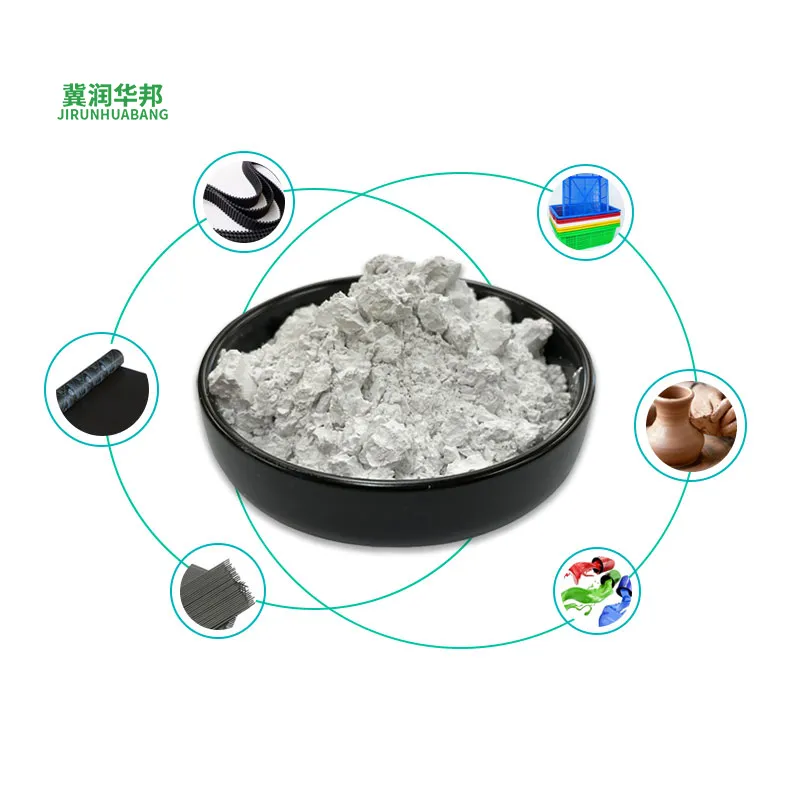
At its core, industrial bentonite is a volcanic ash-derived clay characterized by a high concentration of montmorillonite. Its unique molecular structure allows water molecules to penetrate between the crystal layers, causing the material to swell significantly. This property is the primary driver for its use in sealing, drilling muds, and as a suspending agent in chemical formulations.
The efficacy of the mineral depends largely on the exchangeable cations present in the structure. Sodium-based bentonites offer superior swelling and viscosity, making them ideal for waterproofing, whereas calcium-based varieties are more stable and often used in foundry sand or as a base for other clay products.
Critical Evaluation Metrics for Mineral Quality
Evaluating the quality of non-metallic minerals requires moving beyond basic visual inspections. The primary metric is the swelling index, which determines how effectively the clay can create an impermeable barrier. For specialized applications, the particle size distribution (PSD) is equally critical, as the fineness of the powder dictates the rate of hydration and the homogeneity of the final mixture.
Another essential factor is the purity level, specifically the absence of contaminants like free quartz or organic matter, which can compromise the structural integrity of coatings or the reactivity of chemical catalysts. Industrial grades typically target a specific purity range to ensure that the material behaves predictably under pressure or temperature fluctuations.
Consistency across batches is the hallmark of a professional operation. When sourcing from various regions, the chemical variance in the ore body can lead to unexpected results in production. Therefore, the implementation of ISO9001 quality management systems is not just a formality but a necessity for maintaining stable output in high-volume manufacturing.
The Impact of Purity on Rheological Stability
In the context of fluid dynamics and suspension, the purity of the mineral additive directly influences the thixotropic behavior of the system. High-purity minerals allow for a controlled transition between a gel-like state at rest and a fluid state under shear stress, which is vital for everything from paint application to oil well drilling.
The correlation between mineral purity and rheological stability is non-linear; even a small percentage of impurities can cause premature settling or excessive viscosity, leading to equipment failure or product degradation.
To mitigate these risks, advanced processing techniques are employed to refine the raw ore. This includes precise grinding and screening to achieve specific mesh sizes, ensuring that the mineral can be seamlessly dispersed without creating stress concentration points in the matrix.
Comparative Performance Across Industrial Grades
Different industrial applications require different mineral profiles. For instance, foundry grade bentonite prioritizes bonding strength and thermal stability, while drilling grade focuses on filtration control and lubrication. The balance between these properties is often a trade-off between cost and performance.
By analyzing a relative value index, we can see how different priority factors weigh into the selection process for various industrial needs, ranging from basic filler roles to high-performance reinforcing agents.
Figure 2. Relative Importance of Mineral Properties by Application
Application-Specific Procurement Scenarios
Consider a manufacturer producing automotive components using polymer composites. In this scenario, the addition of a mineral like wollastonite powder acts as a reinforcing agent, enhancing tensile strength and impact resistance. The 400-mesh fineness is critical here to prevent stress concentration points, demonstrating how a specific physical parameter directly translates to part durability in a real-world industrial setting.
Similarly, in the coatings industry, the focus shifts toward opacity and weather resistance. Ultra-fine mineral powders are used not only for their structural benefits but also as flatting agents to achieve a smooth, matte finish. This highlights why procurement teams must communicate precise application goals to their suppliers rather than ordering a generic grade.
Emerging Trends in Non-Metallic Mineral Processing
The industry is moving toward a "precision minerals" model. Rather than selling raw bulk materials, companies are focusing on customized processing—adjusting mesh sizes and chemical treatments to meet the exact needs of the client. This shift reduces waste in the final production line and optimizes material usage.
Sustainability is also driving innovation. There is a growing demand for minerals that can replace synthetic polymers in construction and rubber formulations, reducing the overall carbon footprint of the end product without sacrificing mechanical properties like abrasion resistance or flexibility.
Digitalization of the supply chain is providing better transparency. Real-time quality tracking and detailed certificates of analysis (COA) for every shipment are becoming standard, allowing buyers to integrate mineral shipments into their just-in-time (JIT) manufacturing processes with greater confidence.
Supplier Selection Framework and Trade-offs
Selecting the right partner involves balancing capacity, quality control, and logistical reliability. A supplier with a massive annual output, such as those capable of 200,000 tons, may offer better pricing but requires rigorous audit processes to ensure that quality is not sacrificed for volume.
The geographic location of the source also plays a role in the total cost of ownership. While the base price per ton might be lower in certain regions, the cost of international shipping and the risk of transit delays can offset these gains. This makes the reliability of the service system as important as the product itself.
Ultimately, the decision framework should prioritize the specific technical requirement of the application. The following table outlines how different mineral priorities align with specific industrial outcomes.
| Priority Factor | Technical Requirement | Target Outcome | Relative Suitability |
|---|---|---|---|
| Purity (80-96%) | Low contamination | Chemical Stability | High-End Coatings |
| 400-Mesh Fineness | Seamless dispersion | Dimensional Stability | Auto Parts |
| High Swelling Index | Rapid hydration | Water Impermeability | Civil Engineering |
| Acicular Shape | Fiber-like alignment | Tear Strength | Rubber Formulation |
| Consistent Grade | Batch uniformity | Process Predictability | Mass Production |
| Industrial Grade | Cost-effective purity | Bulk Reinforcement | General Construction |
Questions & Answers
Sodium bentonite is characterized by its exceptional swelling capacity and high viscosity when mixed with water, making it ideal for sealing and drilling applications. Calcium bentonite has much lower swelling properties and is typically used in foundry sand, animal feed, or as a base for other clay-based products. In many industrial processes, calcium bentonite is chemically treated (activated) to convert it into sodium bentonite to enhance its performance.
Mesh size determines the particle fineness. A higher mesh count, such as 400-mesh, indicates finer particles that allow for more seamless dispersion within a matrix (like plastics or rubber). This prevents the formation of stress concentration points, which can lead to structural failure. Finer particles also improve the surface finish of coatings and increase the overall density and stability of the final product.
Beyond pricing, buyers should evaluate the supplier's quality management system (e.g., ISO9001), their capacity for consistent annual output, and their ability to provide detailed Certificates of Analysis (COA). It is also important to assess their experience in exporting to your specific region to ensure logistical efficiency and compliance with local import regulations and purity standards.
In many cases, yes. Natural minerals like wollastonite or bentonite can enhance mechanical properties such as tensile strength and impact resistance. While synthetic fibers might offer higher absolute strength in some niches, mineral fillers are often more cost-effective, more sustainable, and provide better dimensional stability and heat resistance, making them a preferred choice for automotive and construction materials.
Purity ensures that the coating maintains consistent opacity and scrub durability. Impurities can lead to "chalking" or uneven coloring and may reduce the weather resistance of the finish. High-purity mineral powders also act as effective flatting agents, allowing manufacturers to achieve a precise matte effect without compromising the protective qualities of the coating.
The industry is shifting toward more sustainable mining and processing methods, focusing on reducing energy consumption during grinding and minimizing waste. Additionally, the use of natural minerals to replace petroleum-based fillers in rubber and plastics is significantly reducing the environmental footprint of various industrial products, aligning with global green building and manufacturing standards.
Final Thoughts
The transition from bulk commodity sourcing to precision mineral procurement is a reflection of the broader trend toward high-performance manufacturing. Whether the goal is enhancing the tensile strength of an automotive part or ensuring the impermeable seal of a civil engineering project, the technical specifications of the mineral—purity, mesh size, and chemical consistency—are the true determinants of success.
For enterprises operating in the non-metal mineral sector, the path forward lies in the integration of rigorous quality control and a deep understanding of the end-user's application. By focusing on these technical benchmarks, the industry can continue to provide sustainable, cost-effective solutions that redefine performance standards across global markets.